
OntarioMD Survey Reveals that AI is Becoming Part of Clinical Practice
First extensive survey of Ontario community-based physicians and clinicians highlights opportunities to expand AI adoption through trusted guidance, education and ongoing support
TORONTO, Oct. 1, 2026 /CNW/ — OntarioMD (OMD) has released insights from its first extensive survey of Ontario community-based clinicians on the use of artificial intelligence (AI) in health care, revealing significant, but uneven, adoption of AI tools, strong interest in future use and clear opportunities to improve clinician trust through education, support and reputable guidance.
Ontario’s Most Comprehensive Survey of Clinician AI Use
More than 1,600 physicians, nurse practitioners, and clinic managers participated in the survey, making it one of the largest studies of AI use among Ontario community physicians and clinicians. OMD conducted the survey in March 2026 to better understand how clinicians are using AI, the value they see in these technologies, and the barriers that may limit broader adoption.
AI Scribes Lead Adoption as Clinicians Seek Relief from Administrative Burden
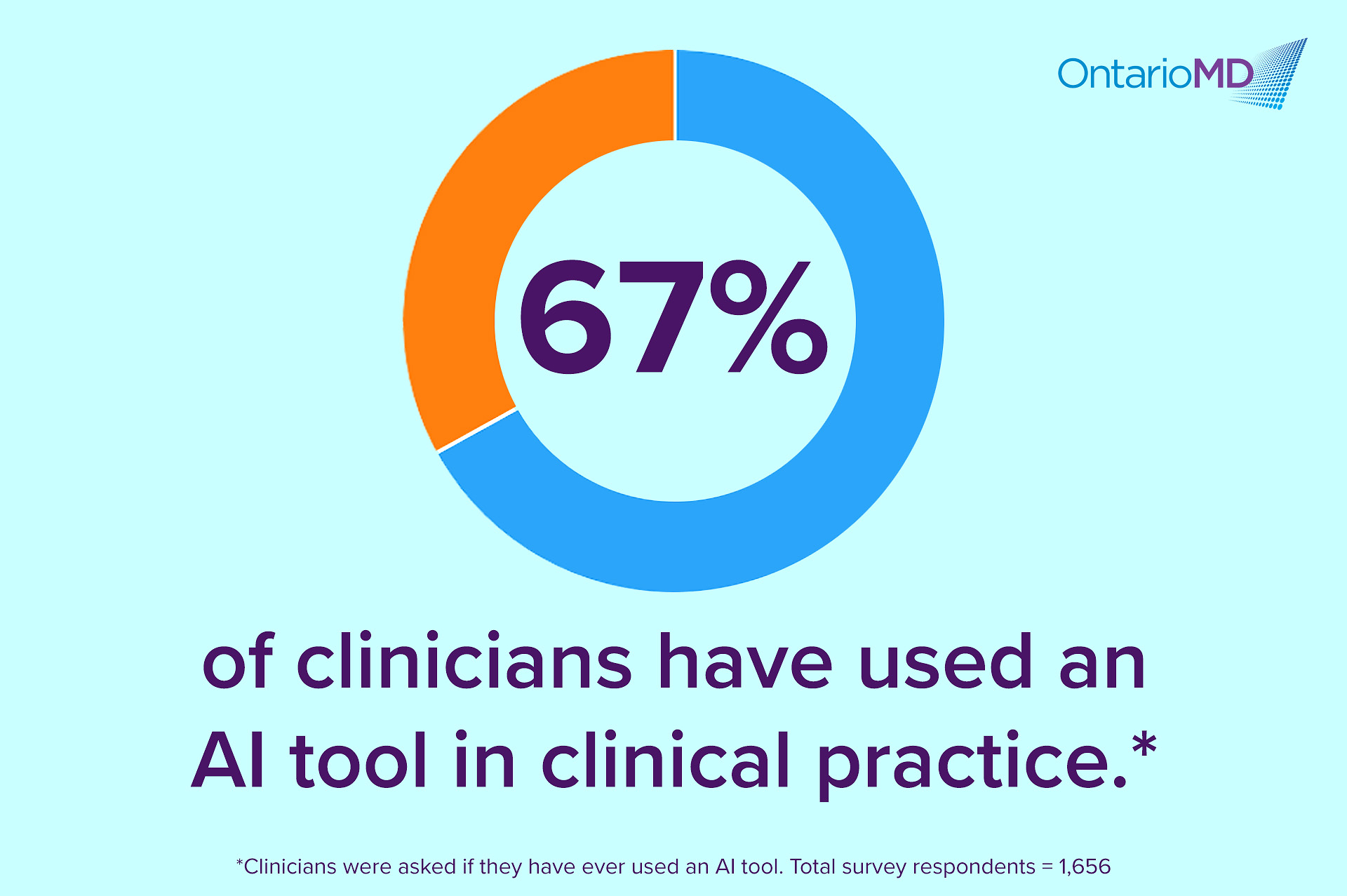
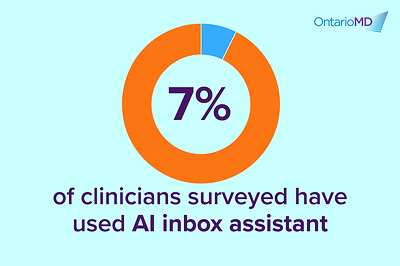
The survey insights show that AI is becoming part of clinical practice. Sixty-seven per cent of respondents reported using an AI tool in their practices. AI scribes were the first widely available AI technology adopted by Ontario physicians and primary care teams. They assist with clinical documentation by generating draft notes from patient visits. AI scribe adoption in Ontario is highest due to evidence that they reduce the amount of time clinicians spend on paperwork Fifty-eight per cent of respondents reported using them to relieve their administrative burden. In comparison, 18% reported using AI clinical decision support tools and 7% reported using AI inbox assistants. Both tools are in earlier stages of physician uptake.
Physicians and clinicians identified administrative burden, documentation requirements, inbox management and workflow inefficiencies as areas where AI can provide meaningful support. Respondents indicated the greatest value comes from tools that save time, reduce repetitive tasks and help clinicians focus more attention on patient care.
Addressing Barriers, Privacy and Regulatory Concerns
The survey also identified several barriers to adoption as well as concerns that must be addressed to support broader adoption. Cost, setup time, and workflow integration were identified as top barriers for adopting AI in their practices.
Among the top concerns cited by respondents were legal and regulatory risks, data privacy, overreliance on AI and the potential loss of the human element in care. The survey results show that physicians and clinicians care deeply about protecting patient information. They want clarity about data handling, storage, consent, and accountability to make informed decisions about the responsible use of AI.
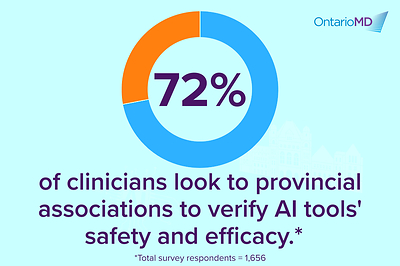
Clinicians expressed strong interest in learning how to integrate AI into clinical workflows, using AI responsibly for patient care and navigating legal and liability considerations. Physicians and clinicians also indicated they are most likely to trust provincial physician organizations, like OMD, for AI information and verification of AI tools for safety and efficacy.
Opportunities to Advance Safe and Responsible Use of AI in Health Care
The survey results both validate OMD’s current efforts to support clinicians with AI adoption and help guide future collaborations with healthcare, technology and policy partners to advance responsible use of digital tools in community-based care. Opportunities identified through the survey include expanding AI education and literacy programs, supporting transparent evaluation of new tools, advocating for stronger governance and privacy safeguards, and helping clinicians navigate adoption challenges.
OMD offers an annual in-person Digital Health Conference tailored to the learning needs of physicians and primary care teams. The conference has added several sessions that help them improve their AI knowledge and feel more equipped to select the right tools for their practices. Session topics presented by legal and privacy experts include AI governance, privacy considerations when adopting AI tools, and advice for safe adoption. Physicians and nurse practitioners can get information about the Ontario AI Scribe Program to understand how to acquire an AI scribe approved by the program. OMD also provides complimentary support to clinicians to integrate AI scribes with their workflows.
“Ontario clinicians are telling us that AI has the potential to reduce administrative burden and improve efficiency, but they also want clear guidance, trusted information and safeguards,” said Dr. Chandi Chandrasena, OMD’s Chief Medical Officer. “These insights will help shape future initiatives that support clinicians and strengthen patient care across the province.”
Clinicians interested in learning more about AI tools, implementation best practices, education opportunities and OMD’s AI initiatives can visit the OMD Practice Hub to access resources and stay informed about upcoming AI programs and services.
About OntarioMD
OntarioMD (OMD) is a national leader in advancing artificial intelligence (AI) and other innovative technologies for family physicians, specialists, nurse practitioners and their clinics in Ontario communities. The company has more than 20 years of proven success in developing and deploying technology solutions that improve patient care. OMD also provides complimentary change management support to help clinicians integrate technology into their workflows to digitally optimize their practices. OMD is a wholly owned subsidiary of the Ontario Medical Association. It receives funding from the Province of Ontario, through its agency Ontario Health.
For the OMD Clinician Survey: AI Use in Ontario report, please visit https://omdpracticehub.com/report-on-ai-evaluation-survey-findings/
Note: Survey findings are based on responses from more than 1,600 Ontario community-based clinicians and may not fully represent the views of the broader clinician population.

SOURCE OntarioMD Inc.
