
Canadian small businesses are growing and holding on to more workers, Wagepoint data shows
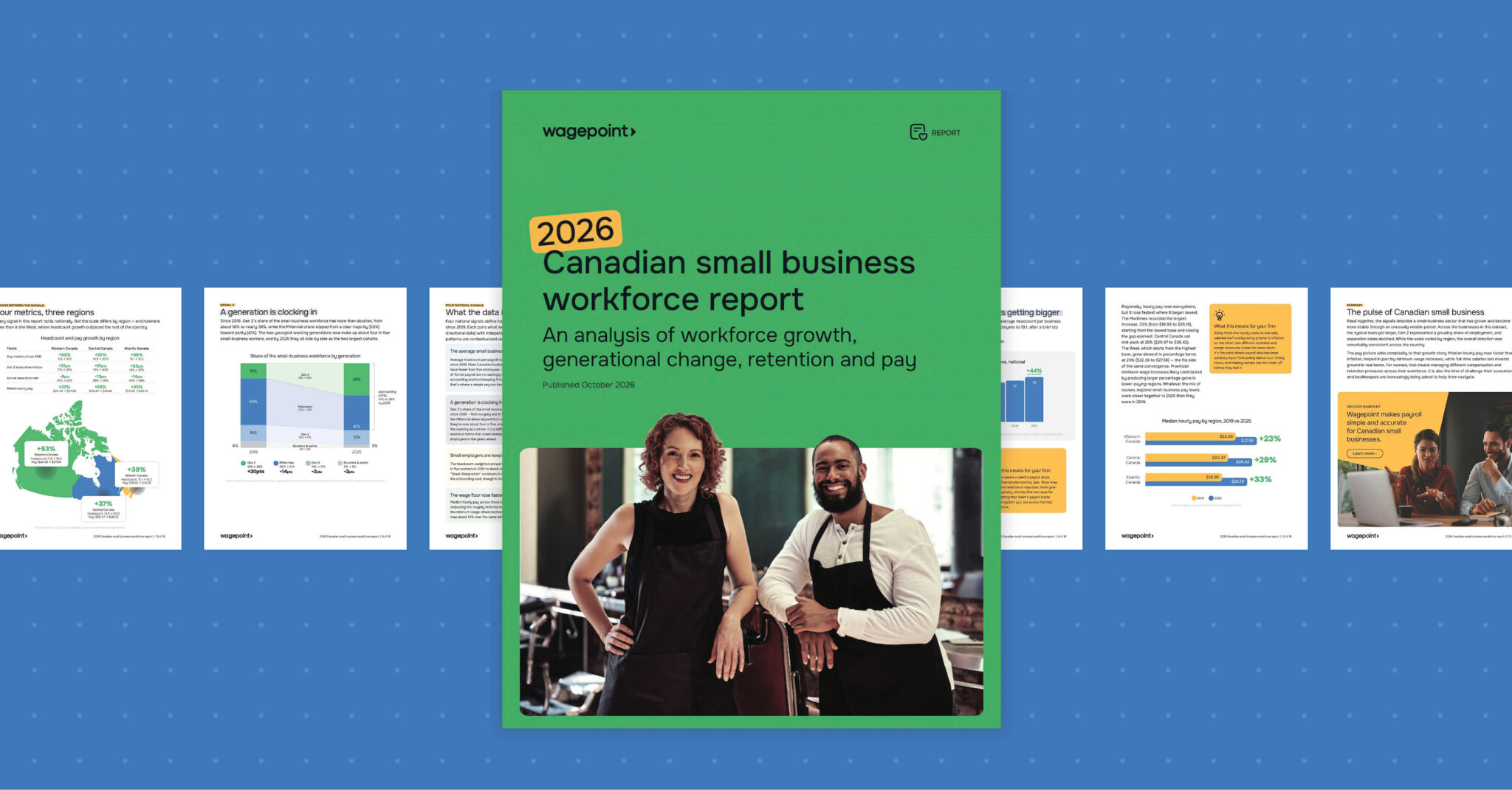
Average team size rose 44% since 2019 as Gen Z’s share of the workforce more than doubled and hourly pay outpaced inflation, according to Wagepoint’s 2026 Canadian Small Business Workforce Report.
CALGARY, AB, Oct. 22, 2026 /CNW/ — Gen Z now makes up 38% of the workforce at Canadian small businesses, nearly matching Millennials at 41%, while employers are seeing fewer workers leave than before the pandemic, according to new data from Wagepoint, a leading provider of payroll software for small businesses (SMBs) across Canada.
The 2026 Canadian Small Business Workforce Report, released today, compares aggregated payroll data from Wagepoint customers from 2019 to 2025. It finds that small businesses have grown their teams, reduced employee separations and increased hourly pay faster than inflation over the six-year period.
The annual separation rate fell from 38% in 2019 to 27% in 2025, while average headcount per business rose 44%, from 13.3 to 19.1 employees. At the same time, Gen Z’s share of the workforce more than doubled, from 18% to 38%, while millennials’ share fell from 55% to 41%.
The report uses aggregated de-identified payroll data of actual hires, departures and pay, giving a direct view of how small businesses are managing their people. Together, these findings point to a small business sector that has changed shape since the pandemic. Teams are bigger, more of the jobs are full-time, and workers are staying longer, even as more of them are early in their careers. For business owners, that means more people to onboard, pay correctly, and retain, along with labour costs that are rising as hourly pay climbs faster than salaries. For accountants and bookkeepers who support them, payroll is becoming a bigger part of the advice that clients need as they navigate the changes.
Key findings, 2019 vs. 2025
- Average headcount per business rose 44%, from 13.3 to 19.1 employees.
- Gen Z share of the workforce rose from 18% to 38%, while the share of millennials fell from 55% to 41%. Together, they accounted for 79% of the workforce in 2025. The annual separation rate fell 11 points, from 38% to 27%.
- Median hourly pay rose 27%, from $20.97 to $26.70, compared with an approximately 20% increase in consumer prices. Median full-time salaries rose about 14%.
- Small businesses also shifted toward full-time work as they grew, with part-time roles falling from 79% of headcount in 2019 to 69% in 2025.
“Payroll data gives us a real-world view of how Canada’s small businesses are changing, from who they hire to how they pay and retain their people,” says Ben Richmond, CEO of Wagepoint. “These trends matter because small businesses are a major part of Canada’s economy, yet their workforce realities can be overlooked in broader employment data. Seeing how teams are growing, who’s entering the workforce, and how wages are keeping pace with inflation helps us better understand the pressures and opportunities facing small businesses today.”
Regional results
- In Western Canada, average headcount grew 53%, from 11.8 to 18.0, the largest increase of the three regions. The West also has the highest median hourly pay, at $27.58.
- Central Canada has the largest businesses on average, with 20.0 employees in 2025, up from 14.5. Its separation rate fell from 39% to 26%.
- In the Atlantic provinces, Gen Z’s share of the workforce rose from 14% to 37%, the biggest increase in the country, even though the region has Canada’s oldest population. Median hourly pay there rose 33%, from $18.95 to $25.19.
The full report is available at https://www.wagepoint.com/resources/report/wagepoint-small-business-workforce-report-2026/.
About the data
Figures are based on de-identified, aggregated payroll data from approximately 6,800 Canadian small and mid-sized businesses and 106,000 employees that used Wagepoint between 2019 and 2025. Partial-year 2026 data is not included. Dollar figures are in Canadian dollars. Results are shares, medians and ratios, and indicate trends among businesses that run formal payroll. They are not estimates of market share or of all Canadian businesses. Western Canada includes BC, AB, SK, MB and the territories; Central Canada includes ON and QC; Atlantic Canada includes NB, NS, PE and NL. Inflation figures are from Statistics Canada.
About Wagepoint
Founded in 2012, Wagepoint is Canada’s trusted provider of payroll software for small businesses. With more than a decade of experience and more than 30,000 businesses, accountants, and bookkeepers relying on the platform, Wagepoint delivers on its founding promise: making payroll simple and accurate for Canadian small businesses so they can focus more on doing what they love.
To learn more, please visit www.wagepoint.com.

SOURCE Wagepoint
