
CHAR Technologies wins price target raise from this analyst


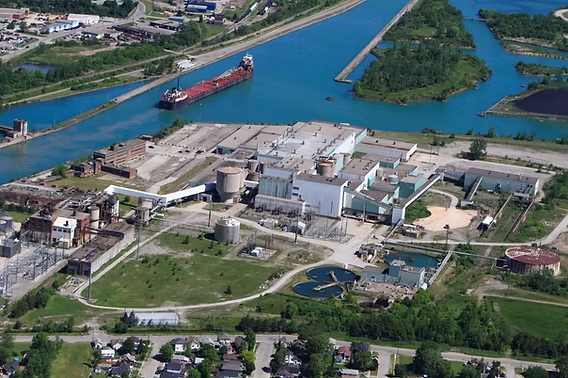
On Oct. 22, Paradigm Capital analyst Marvin Wolff raised his target on CHAR Technologies (CHAR Technologies Stock Quote, Chart, News, Analysts, Financials TSXV:YES) to $0.75 from $0.55 following progress at the company’s first commercial biocoal production facility in Thorold, Ontario.
Wolff maintained his “Buy” rating, citing regulatory progress, expanding production capacity and opportunities in renewable natural gas (RNG) and low-carbon steelmaking.
CHAR has received final Electrical Safety Authority approval for its Thorold facility and is awaiting final approval from the Technical Standards and Safety Authority, expected next week.
Wolff pointed out that the facility’s first kiln, capable of producing 5,500 tonnes of biocoal annually, is preparing for a full commercial ramp-up targeted for completion by December. “CHAR Technologies Ltd. sits at the intersection of three major trends: ESG, steel decarbonization and RNG generation,” Wolff said.
The analyst said the company’s patented high-temperature pyrolysis technology converts waste biomass, including wood waste, into biocoal and renewable natural gas. “CHAR is unique as it is the only public company using HTP and can produce economic quantities of biocoal and RNG,” he said.
Wolff said there is growing support from governments and industrial customers, including steelmaker ArcelorMittal, which owns approximately 10.6% of CHAR. ArcelorMittal has an agreement to purchase up to 5,000 tonnes of biocoal annually from Thorold for use at its Dofasco steelworks in Hamilton. CHAR has also received $14.2-million in grants and interest-free loans from the federal and Ontario governments over the past year.
“The company has patented High Temperature Pyrolysis (HTP) technology, making it the only company in North America to be able to produce biocoal in scale and at attractive costs,” Wolff said.
He said the combination of long-term feedstock supplies, industrial partnerships and offtake agreements provides a foundation for expansion.
Beyond the initial Thorold kiln, CHAR plans to install a second unit and develop renewable natural gas production capacity of approximately 475,000 gigajoules annually. Wolff expects the second kiln to begin production in fiscal 2028, with RNG production scheduled for fiscal 2029.
The company is also advancing projects in Nipigon and Espanola, Ontario, and St-Félicien and Saguenay, Quebec. At Nipigon, CHAR is commissioning wood handling and drying equipment while completing engineering work for two kilns with combined annual capacity of 15,000 tonnes. Wolff expects the first kiln to begin production in fiscal 2028. In Quebec, the St-Félicien project is expected to produce 7,500 tonnes of biochar and 250,000 gigajoules of RNG annually beginning in fiscal 2028. That biochar will support pellet production at CHAR’s Saguenay facility, where capacity is expected to expand to approximately 13,000 tonnes annually.
CHAR also has an agreement to supply Elkem with 12,500 tonnes of biocoal annually.
Wolff also highlighted the company’s partnership with BMI Group, which owns approximately 8.8% of CHAR and is supporting development of the former pulp and paper mill site in Espanola. The project is targeting eventual annual biocoal production of 50,000 tonnes.
“Each additional production location is centered around actively worked forest lands, offering a long-term source of wood waste to feed the process,” Wolff said.
He said CHAR’s joint-venture model, with local partners typically holding approximately 50% ownership, allows it to advance multiple projects while sharing development costs. “The diverse geographic nature of each project and joint-venture financing will enable CHAR to simultaneously develop several sites at once, allowing rapid EBITDA growth,” he said.
Wolff said there is licensing and royalty opportunities beyond CHAR’s Canadian production facilities. The company has reached a licensing arrangement with France’s GazoTech SAS and is working with Synagro on technology that uses high-temperature pyrolysis to destroy PFAS chemicals in biosolids. Wolff said the Synagro technology could generate recurring royalties as additional facilities adopt the process.
His forecasts do not include those potential royalties.
Wolff raised his valuation multiple to 10 times fiscal 2030 EBITDA from nine times, reflecting progress in proving the technology and securing commercial agreements. His $0.75 target applies that multiple to estimated fiscal 2030 EBITDA of $28.9-million, discounted at 9% annually. However, he lowered his near-term financial forecasts to reflect revised project development timelines.
Wolff expects CHAR to generate negative EBITDA of $4.7-million on revenue of $2.6-million in fiscal 2026, followed by negative EBITDA of $6.8-million on revenue of $12.1-million in fiscal 2027. He forecasts EBITDA turning positive at approximately $650,000 on revenue of $35.6-million in fiscal 2028, increasing to EBITDA of $19.4-million on revenue of $68.7-million in fiscal 2029. By fiscal 2030, Wolff expects revenue to reach $95.1-million, with EBITDA of $28.9-million.
“CHAR is a young company and its growth curve is just beginning, as reflected in its current relatively low valuation,” Wolff said.
Nick Waddell
Founder of Cantech Letter
Cantech Letter founder and editor Nick Waddell has lived in five Canadian provinces and is proud of his country's often overlooked contributions to the world of science and technology. Waddell takes a regular shift on the Canadian media circuit, making appearances on CTV, CBC and BNN, and contributing to publications such as Canadian Business and Business Insider.
Related Posts
Paradigm Capital analyst Marvin Wolff maintained a “Buy” rating and $0.55 target price for CHAR Technologies (CHAR Technologies Stock Quote,...
Paradigm Capital analyst Marvin Wolff cut his price target on CHAR Technologies (CHAR Technologies Stock Quote, Chart, News, Analysts, Financials...