
Analyst cuts price target on Air Canada, higher fuel costs to blame

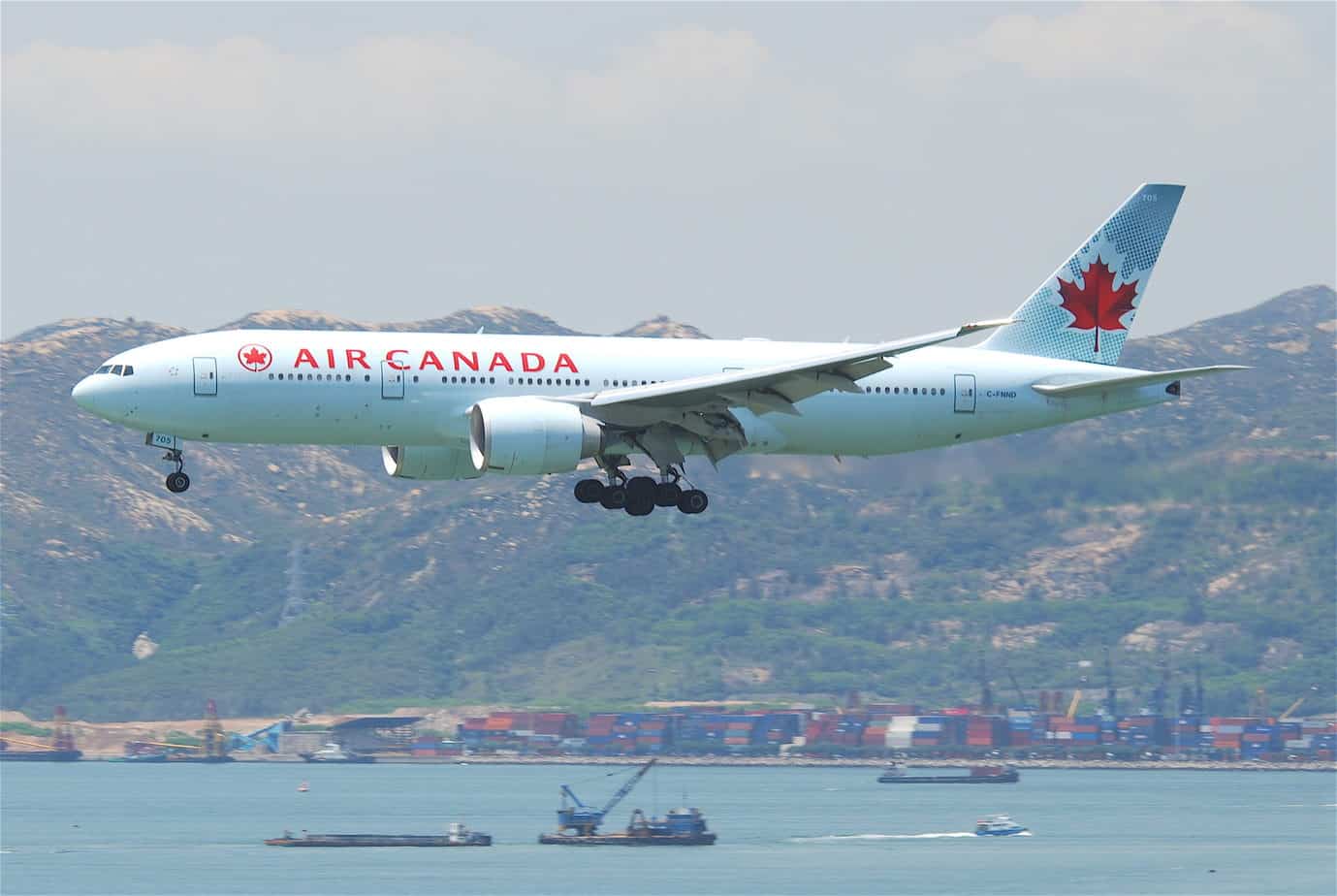
National Bank Financial analyst Cameron Doerksen lowered his target on Air Canada (Air Canada Stock Quote, Chart, News, Analysts, Financials TSX:AC) to $37.00 from $40.00, citing higher jet fuel costs that are expected to weigh on profitability through the fourth quarter.
As reported by the Globe and Mail, Doerksen maintained his “Outperform” rating on Air Canada. The average target is $35.92.
The analyst noted that jet fuel averaged $1.55 per litre in Q3, above Air Canada’s assumption of $1.38. The current spot price of $1.89 per litre is also well above the airline’s Q4 assumption of $1.29.
Doerksen said Air Canada had expected to offset 60% of higher fuel costs through increased fares in Q3 and fully recover those costs in Q4. He now believes the Q4 target is unlikely to be achieved.
However, he said fare increases are gaining traction.
Canadian CPI data showed airfares rose 15% year-over-year in August. More recent data from Kayak showed domestic fares up 55% year-over-year and international fares from Canada up 23%.
Doerksen said the increases suggest Air Canada has been successful in passing along some higher costs to passengers.
Ahead of Air Canada’s Nov. 4 Q3 results, he lowered his earnings forecasts to reflect higher fuel prices, partly offset by stronger passenger yields.
His Q3 EBITDA estimate falls to $750-million from $810-million.
For 2026, Doerksen now expects EBITDA of $2.8-billion, below Air Canada’s guidance range of $2.9-billion to $3.2-billion. He also lowered his 2027 EBITDA forecast to $3.3-billion from $3.5-billion.
Despite the near-term pressure, Doerksen remains positive on Air Canada’s longer-term outlook.
“Higher jet fuel prices will weigh on results in the near-term, but longer-term we remain positive as we see Air Canada being successful in raising fares to offset higher costs while competitors may be forced into further capacity reductions,” he said.
Doerksen expects 2027 to mark an inflection point as profitability normalizes, non-fuel unit cost increases moderate and the current capital spending cycle peaks.
-30-
Rod Weatherbie
Writer
Rod Weatherbie is a journalist based in Prince Edward Island. Since 2004, he has written extensively about the Canadian property and casualty insurance landscape. He was also a founder and contributing editor for a Toronto-based arts website and a PEI-based food magazine. His fiction and poetry have been featured in The Fiddlehead, The Antigonish Review, and Juniper.
Related Posts
Stifel analyst Daryl Young says Air Canada’s (Air Canada Stock Quote, Chart, News, Analysts, Financials TSX:AC) Q2 results should be...
National Bank Financial analyst Cameron Doerksen says Air Canada (Air Canada Stock Quote, Chart, News, Analysts, Financials TSX:AC) shares still...