
Using Subsurface Energy to Power the Future of Remote Communities
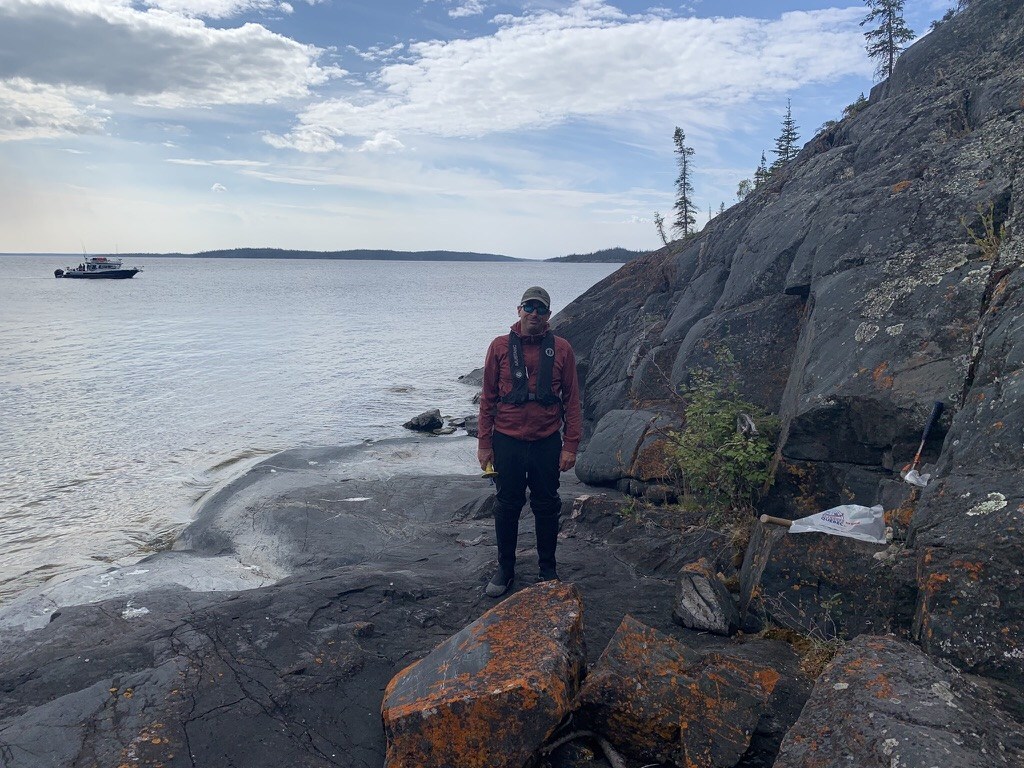
INRS Professor Jasmin Raymond holds a $1.4M Canada Research Chair to reduce reliance on fossil fuels through geoenergy systems
QUÉBEC CITY, June 10, 2026 /CNW/ – As the climate crisis intensifies and the need to reduce reliance on fossil fuels becomes increasingly urgent, the subsurface is emerging as a key asset in Canada’s energy transition, particularly for remote communities. It is in this context that Professor Jasmin Raymond of the Institut national de la recherche scientifique (INRS) has been appointed to the Tier 1 Canada Research Chair in Sustainable Geoenergy Systems Analysis, funded at $1.4 million by the Natural Sciences and Engineering Research Council of Canada (NSERC).
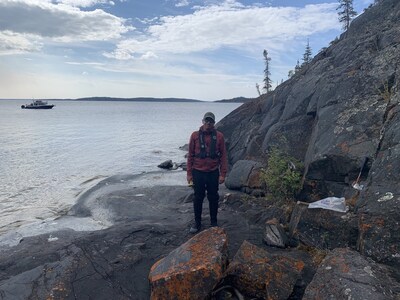
The Chair aims to accelerate the energy transition and reduce dependence on fossil fuels by advancing innovative geoenergy solutions. It builds on Professor Raymond’s recognized expertise in geothermal energy–used for heating, cooling, and electricity generation–and explores the potential of the Earth’s crust to meet energy needs while minimizing environmental impacts.
His research program combines numerical modelling, geological characterization, and field experimentation in natural laboratory settings, and focuses on three main areas: geothermal energy, green hydrogen storage, and natural hydrogen exploration.
Supporting Energy Autonomy Through Geothermal Energy
Professor Raymond and his team are exploring the geothermal potential of remote regions, working closely with rural, isolated, and Indigenous communities, particularly in northern Canada. Their research is conducted directly in these communities, with the goal of supporting their energy transition, as many remain heavily reliant on diesel and other fossil fuels.
“Very little scientific research is conducted in these remote communities. They represent markets that are too small to attract major energy industry players. Yet investing in these regions is essential to strengthen their energy sovereignty and reduce the environmental footprint associated with fossil fuel use,”
— Jasmin Raymond, Professor at INRS and Canada Research Chair in Sustainable Geoenergy Systems Analysis
As scientific lead of Geothermal Open Laboratory at the INRS Eau Terre Environnement Research Centre, Professor Raymond is building on successful results obtained in subarctic environments and extending them to more extreme conditions, including the Arctic’s Franklinian Basin.
Underground Green Hydrogen Storage to Stabilize Energy Supply
As part of the Chair, his team is also investigating ways to convert surplus electricity generated from renewable sources, such as wind and solar, into green hydrogen. This approach enables energy storage and contributes to stabilizing energy systems.
The research focuses in particular on the Magdalen Islands, where subsurface salt formations are well suited for the creation of large underground storage caverns.
“The Islands still rely mainly on a thermal power plant for their energy supply, but wind energy is developing rapidly. Our work aims to support this shift by providing an underground storage solution using green hydrogen to ensure a reliable and continuous energy supply,”
— Jasmin Raymond
Natural Hydrogen: A Promising Emerging Resource
Professor Raymond’s team is also investigating naturally occurring geological hydrogen reservoirs–an emerging and highly promising energy resource that could be produced without greenhouse gas emissions.
Research is currently focused on the Mistassini and Otish basins, located north of Chibougamau.
“Natural hydrogen holds significant promise. It could reshape the energy landscape by addressing key challenges of the transition, including the intermittency of renewable energy, long-distance transport needs, and the demands of industrial sectors requiring high-temperature heat,”
— Jasmin Raymond
By exploring these three pathways–geothermal energy, green hydrogen storage, and natural hydrogen exploration –Professor Raymond and his team aim to contribute actively to climate change mitigation. The Chair will support the development of sustainable geoenergy systems capable of meeting Canada’s environmental, technological, and economic challenges, particularly in remote regions.
Tier 1 Chairs, tenable for seven years and renewable once, are for outstanding researchers acknowledged by their peers as world leaders in their fields. For each Tier 1 Chair, the institution receives $200,000 annually for seven years.
Tier 2 Chairs, tenable for five years and renewable once, are for exceptional emerging researchers, acknowledged by their peers as having the potential to lead in their field. For each Tier 2 Chair, the institution receives $100,000 annually for five years, with an additional $20,000 annual research stipend for first-term Tier 2 Chairs.
About INRS
The Institut national de la recherche scientifique (INRS) is an academic institution dedicated exclusively to graduate research and training in strategic sectors in Quebec. Since 1969, as per its mission, it has actively contributed to Quebec’s economic, social, and cultural development. INRS ranks first in Quebec in research intensity. It is made up of five interdisciplinary research and training centres located in Quebec City, Montreal, Laval, and Varennes, and Charlevoix, which focus their efforts on strategic sectors: water, earth, and environment (Eau Terre Environnement Research Centre); energy, materials, and telecommunications (Énergie Matériaux Télécommunications Research Centre); urbanization, culture, and society (Urbanisation Culture Société Research Centre); and health and biotechnology (Armand-Frappier Santé Biotechnologie Research Centre), and Ruralités durables (a center currently under development). Its community includes nearly 1,500 members, including students, postdoctoral fellows, faculty members, and staff.
SOURCE Institut National de la recherche scientifique (INRS)
