
Syntholene Energy is undervalued, this analyst says

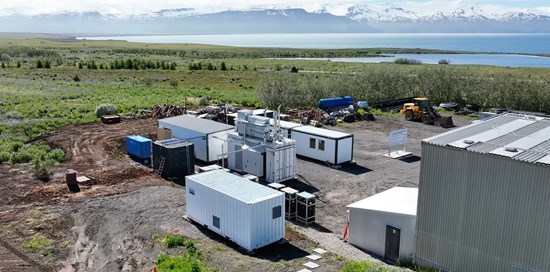
Research Capital Corporation analyst Greg McLeish says Syntholene Energy’s (Syntholene Energy Stock Quote, Chart, News, Analysts, Financials TSXV:ESAF) main opportunity is tied to lowering the cost of clean hydrogen for synthetic fuels.
In a Sept. 21 initiation report, McLeish launched coverage of Syntholene with a “Speculative Buy” rating and $1.00 target.
“We believe the most important aspect of the Syntholene story is its potential to lower the cost of clean hydrogen, one of the largest economic bottlenecks facing the emerging eSAF industry,” McLeish said.
Syntholene is developing a geothermal-integrated hydrogen platform that combines high-temperature solid oxide electrolysis, geothermal heat and low-carbon electricity.
McLeish said hydrogen and the electricity needed to produce it are among the largest cost inputs in power-to-liquids production, making hydrogen economics central to the outlook for electro-sustainable aviation fuel.
The analyst said KBR’s July 2026 technical review referenced targeted SOEC stack electrical consumption of about 36.8 kilowatt-hours per kilogram of hydrogen, which is 25% to 30% below conventional electrolysis.
If demonstrated commercially, McLeish said that efficiency advantage could create opportunities in eSAF, broader synthetic fuels, industrial hydrogen and other energy-transition markets.
KBR characterized Syntholene’s approach as innovative, citing geothermal integration, higher-efficiency SOEC technology, thermal integration and Dynelectro’s dynamic AC operation as potential differentiators.
“In our view, the principal investment debate has shifted from scientific feasibility toward operating performance, durability, scale-up and economics,” McLeish said.
Syntholene has completed Phase One effects testing at its Húsavík demonstration facility, including data collection across its integrated SOEC, Thermal Coupling Heat Exchanger and balance-of-plant systems.
Phase Two high-power operations are now underway and are expected to generate more data on electrical efficiency, hydrogen production, thermal integration and system stability.
McLeish said independent validation of the combined dataset is the next major technical de-risking milestone.
Syntholene estimates hydrogen production costs of about US$1.75 per kilogram at US$30 per megawatt-hour electricity. KBR’s broader methodology estimates a real levelized hydrogen selling price of about US$2.44 per kilogram, including capital, financing, depreciation, utilization, stack replacement and producer return.
McLeish said the two measures are complementary, with direct production cost showing the technology’s potential operating advantage and KBR’s levelized cost providing a more conservative project-level benchmark.
He said European eSAF mandates have effectively legislated demand into existence through 2050, while industry forecasts suggest Europe could remain about 40% to 45% undersupplied by 2030.
McLeish said the industry’s central challenge is increasingly not demand creation, but developing enough low-cost supply.
“If Syntholene can establish a durable hydrogen cost advantage, we believe the opportunity could extend beyond aviation into broader synthetic fuels, industrial hydrogen and other energy-transition markets,” he said.
McLeish said his $1.00 target reflects the valuation he believes could be supported after successful Phase Two testing and independent validation, rather than an estimate of Syntholene’s longer-term commercial value.
The analyst said an enterprise value of about US$50-million to US$75-million would be a reasonable framework following those milestones.
Phase One completion does not warrant a higher target valuation on its own, but McLeish said it modestly increases his confidence in Syntholene’s ability to reach the operating-validation milestones behind his target.
He said the upper end of his valuation range remains less than half of Prometheus Fuels’ estimated US$162-million 2020 Series A valuation, well below Infinium’s estimated US$200-million to US$270-million valuation during early commercial development and less than one-fifth of LanzaJet’s estimated US$402-million valuation at formation.
McLeish said that discount remains appropriate because Syntholene has raised substantially less capital and has not yet disclosed quantitative integrated operating performance, completed independent validation or secured commercial engineering, strategic capital and binding offtake.
Using about US$60-million as his central target enterprise value and adding roughly US$1.7-million of pro forma net cash, McLeish calculates an implied equity value of about US$61.7-million.
At a C$/US$ exchange rate of 1.39, that translates to about $85.8-million of equity value, or about $1.01 per share based on roughly 85.1-million pro forma basic shares outstanding.
McLeish said successful Phase Two results, followed by commercial engineering, competitive long-term power arrangements, binding offtake and project financing, could support further target-price revisions as the investment thesis evolves.
-30-
Nick Waddell
Founder of Cantech Letter
Cantech Letter founder and editor Nick Waddell has lived in five Canadian provinces and is proud of his country's often overlooked contributions to the world of science and technology. Waddell takes a regular shift on the Canadian media circuit, making appearances on CTV, CBC and BNN, and contributing to publications such as Canadian Business and Business Insider.