
Deep Fission stock is a buy, this analyst says

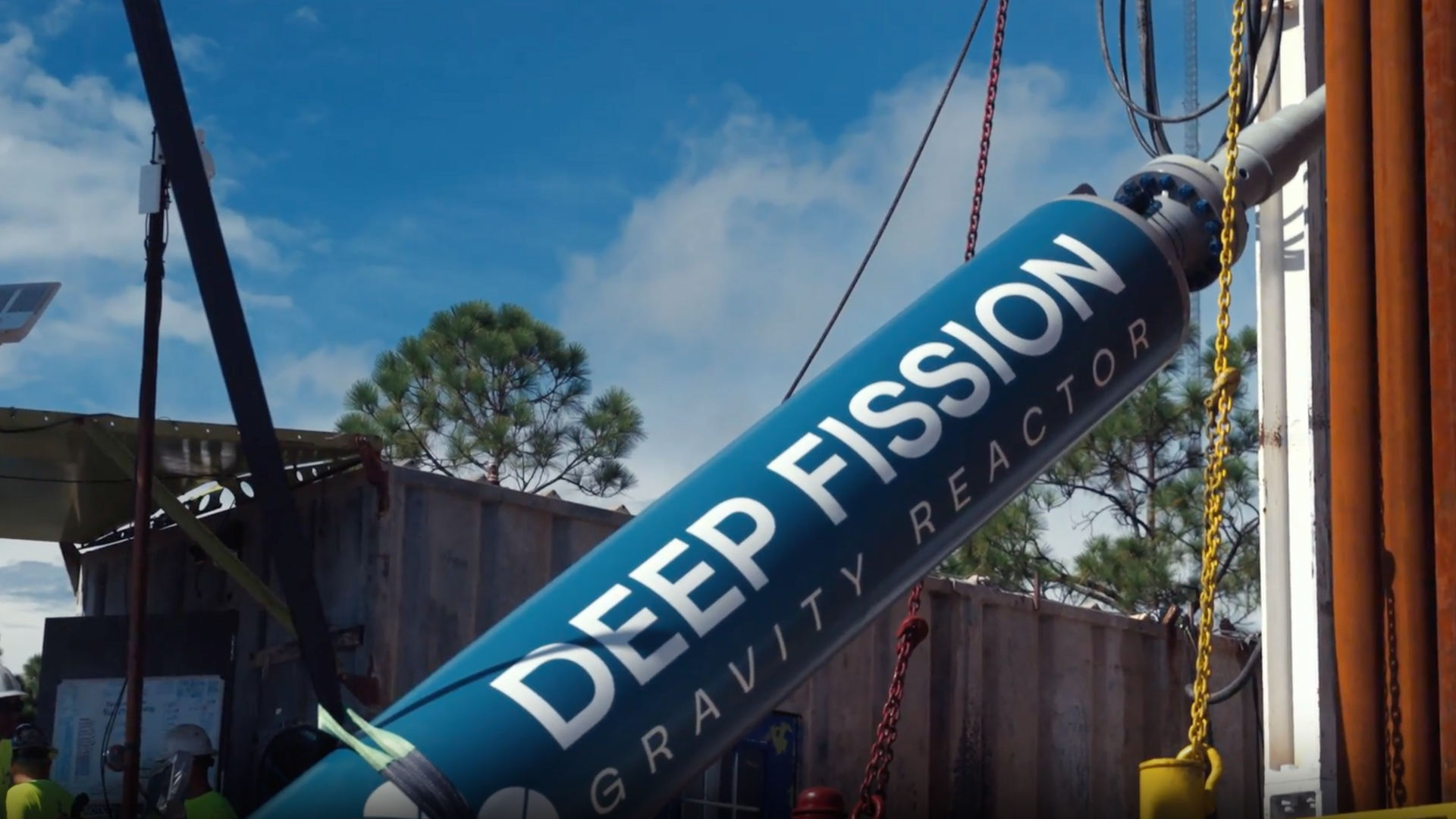
Roth Capital Partners is initiating coverage of Deep Fission (Deep Fission Stock Quote, Chart, News, Analysts, Financials NASDAQ:FISN), a small modular reactor manufacturer developing underground nuclear power technology.
In a Sept. 22 report, analyst Craig Irwin launched coverage with a “Buy” rating and US$18.00 target.
Deep Fission, based in Berkeley, Calif., is developing the Gravity Reactor, a 15-megawatt small modular reactor designed to operate at the bottom of a 6,000-foot borehole.
“This design eliminates costly containment systems, places reactors at twice the depth of geologic repositories approved for spent fuel storage, leveraging technology that is already generally mature from other industries,” Irwin said.
The company was one of ten selected for the U.S. Department of Energy’s Reactor Pilot Program, which is intended to accelerate project approvals.
Irwin said the Gravity Reactor combines established technologies, including pressurized water reactors, oil and gas drilling, and geothermal heat handling.
The analyst said placing the reactor underground could eliminate the need for a 12-inch steel containment vessel and large above-ground safety structures.
After the fuel is spent, a new reactor canister can be lowered into the borehole for another power generation cycle. At end of life, the borehole would be sealed with bentonite clay and cement.
Irwin said regulatory progress and development of the company’s Parsons, Kansas, facility are likely to be the main catalysts ahead of expected 2027 commissioning.
Deep Fission completed drilling of a 6,000-foot data acquisition well in May 2026 and recently installed and retrieved a replica canister inside a 100-foot borehole.
Irwin expects a full-size borehole to be drilled in the second half of 2026, with surface structures completed in the first half of 2027.
He expects initial revenue in the second half of 2027, when the DOE demonstration reactor converts to commercial operation. Commercial sales are expected to begin in 2028.
Deep Fission has letters of intent covering more than 18.5 gigawatts of potential demand from data centres, industrial parks and other developers.
Irwin’s model assumes one unit delivered in 2028, eight in 2029 and 40 in 2030, rising to 200 units in 2033.
The analyst assumes a capital cost of about US$80-million per Gravity Reactor, or annual revenue of about US$20-million per reactor.
Irwin expects Deep Fission to reach its first positive earnings and EBITDA in 2030, though free cash flow is expected to remain negative under the company’s deployment model.
His US$18.00 target is based on a discounted cash flow analysis through 2033, using a 30% discount rate and a six times EV/EBITDA terminal multiple.
“We expect updates on the commercial and regulatory progress to serve as valuation catalysts, and perceived changes in lowering commercialization risks could potentially support upside to our target,” Irwin said.
Irwin expects Deep Fission to generate negative Adjusted EBITDA of US$71.6-million on no revenue in fiscal 2026, followed by negative Adjusted EBITDA of US$80.5-million on revenue of US$300,000 in fiscal 2027.
-30-
Rod Weatherbie
Writer
Rod Weatherbie is a journalist based in Prince Edward Island. Since 2004, he has written extensively about the Canadian property and casualty insurance landscape. He was also a founder and contributing editor for a Toronto-based arts website and a PEI-based food magazine. His fiction and poetry have been featured in The Fiddlehead, The Antigonish Review, and Juniper.