
Why hard assets will continue to gain value in this economy

Research Capital analyst Greg McLeish says the Bank of Canada is facing a more difficult policy backdrop, with soft domestic growth colliding with renewed inflation pressure from higher energy prices and geopolitical instability.
In a June 8 research report, McLeish said the Bank of Canada’s decision to hold its policy rate at 2.25% highlighted a growing dilemma rather than confidence in the outlook.
Canada’s broader problem is weak productivity, the analyst argues. While headline GDP has continued to expand modestly, much of that growth has been supported by population gains rather than stronger output per person. Since 2015, he said, federal program spending per Canadian has increased sharply while real GDP per capita has shown little improvement.
“Canada’s economy remains soft, with weak business investment, rising unemployment, and excess capacity that would normally justify lower interest rates,” McLeish said.
But he said higher oil prices and global instability are pushing inflation back toward 3%, limiting the Bank’s ability to provide additional stimulus. Governor Tiff Macklem’s warning that “there is no risk-free path for the policy interest rate” underscored the trade-off between supporting growth and containing inflation.
McLeish said the Bank is no longer simply debating how quickly rates can fall, but which risk is more dangerous: weaker growth or a renewed inflation cycle. He said global events are increasingly driving Canadian monetary policy, reducing flexibility at a time when structural growth challenges are becoming more visible.
Canada’s broader problem is weak productivity, the analyst argues. While headline GDP has continued to expand modestly, much of that growth has been supported by population gains rather than stronger output per person. Since 2015, he said, federal program spending per Canadian has increased sharply while real GDP per capita has shown little improvement.
“When spending rises substantially faster than economic output, growth increasingly becomes dependent on continued fiscal support rather than self-sustaining private-sector expansion,” McLeish said.
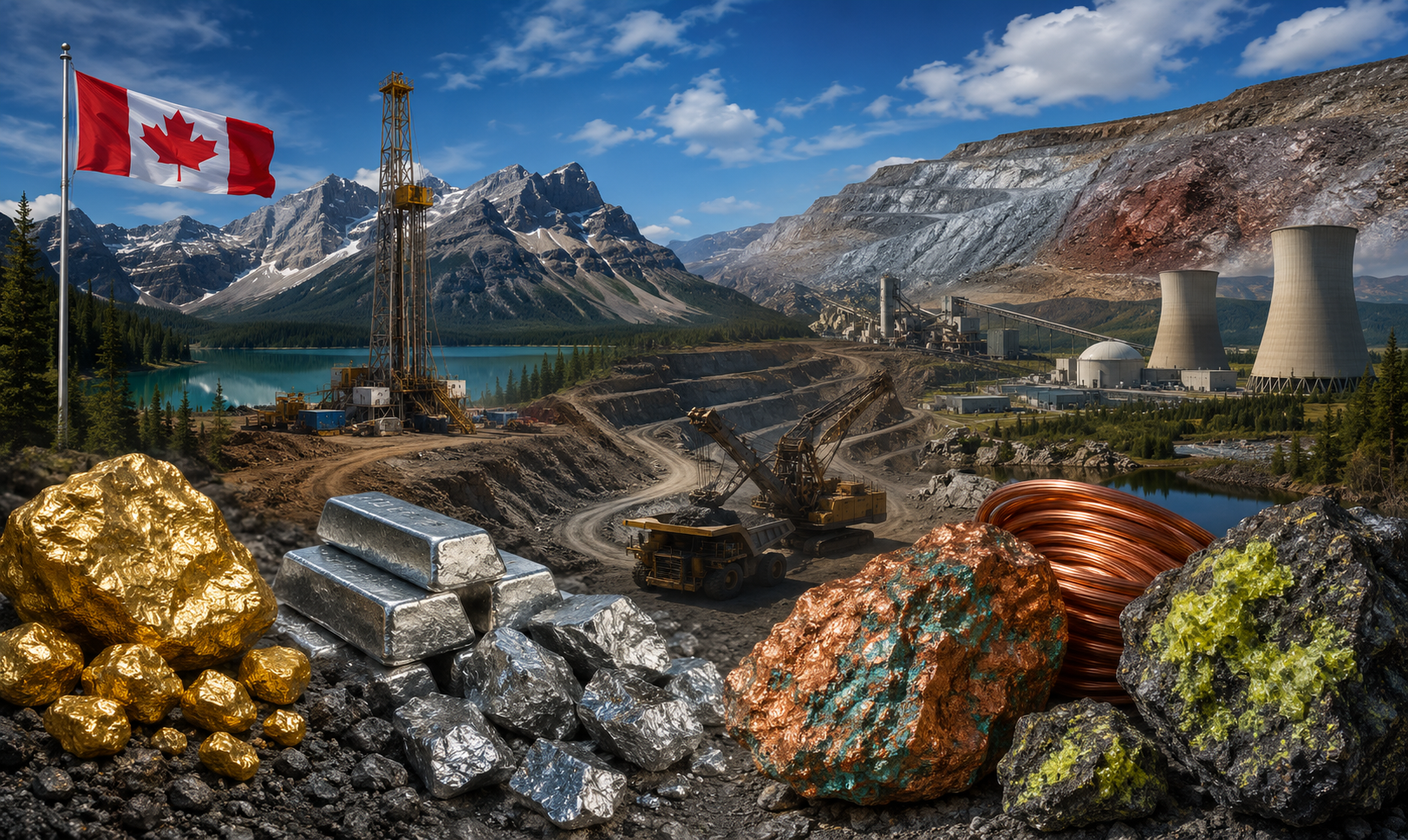
For investors, that backdrop strengthens the case for hard assets, including gold, silver, copper, uranium and Bitcoin, the analyst argues. Unlike financial assets, McLeish said, scarce assets cannot be created through deficit spending, monetary policy decisions or government borrowing.
“Their supply is finite,” he said.
McLeish said that distinction may become increasingly important as debt expands faster than productivity, government spending grows faster than economic output and policymakers face fewer easy choices.
“In our view, that distinction may become one of the defining investment themes of the decade ahead,” he said.
-30-
Nick Waddell
Founder of Cantech Letter
Cantech Letter founder and editor Nick Waddell has lived in five Canadian provinces and is proud of his country's often overlooked contributions to the world of science and technology. Waddell takes a regular shift on the Canadian media circuit, making appearances on CTV, CBC and BNN, and contributing to publications such as Canadian Business and Business Insider.