
Venture for Canada Proposes Model to Help Small Businesses Responsibly Implement AI While Creating Workforce Opportunities for Young Canadians

TORONTO, July 13, 2026 /CNW/ – As Canada launches its new National Artificial Intelligence Strategy, AI for All, Venture for Canada is releasing a major policy brief proposing a scalable solution to one of the strategy’s central priorities: helping small and medium-sized enterprises (SMEs) responsibly adopt AI by empowering students and recent graduates to contribute to its design and implementation.

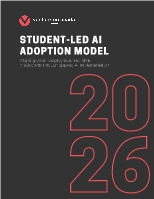
The report, Student-Led AI Adoption Model: Aligning Youth Employment and SME Productivity Through Applied AI Implementation, argues that two of Canada’s most pressing workforce challenges have traditionally been treated as separate issues. Young Canadians are struggling to gain meaningful early-career experience at the same time many SMEs lack the capacity, expertise, and resources to integrate AI into their operations.
Rather than addressing these challenges independently, Venture for Canada proposes connecting them as an integrated solution where labour and technology policies come together.
The model embeds students and recent graduates into SMEs through structured AI implementation projects, where they can assist businesses identify practical AI opportunities, improve workflows, test accessible AI tools, and implement responsible, human-centred solutions. In return, students gain hands-on experience applying AI in real business environments–experience that is increasingly difficult to obtain through traditional education alone.
“The model simultaneously strengthens early-career AI literacy and accelerates responsible AI adoption across Canada’s productive base.” said Steven Wang, CEO of Venture for Canada.
The timing is significant.
Unemployment among young Canadians aged 15 to 24 is roughly double the national average, while only 12.5% of Canadian SMEs report using AI in producing goods or delivering services–even though SMEs account for approximately 98% of businesses and more than 63% of private-sector employment. The report argues that Canada’s productivity challenge is increasingly an implementation challenge rather than just a technology challenge.
The proposed model builds on infrastructure that already exists.
The framework is designed as a delivery overlay that can be integrated into existing internships, co-op placements, fellowships, youth employment initiatives, and experiential learning programs, including the federal government’s Student Work Placement Program through which Venture for Canada serves as a major delivery partner. In this model, students receive training in responsible AI and work alongside SMEs through structured implementation sprints focused on identifying business opportunities, evaluating AI use cases, and delivering measurable productivity improvements.
The proposal also aligns with recent commitments to accelerate AI adoption among Canadian businesses as well as the federal government’s broader strategy to boost economic productivity. By connecting youth employment with SME productivity, Venture for Canada believes Canada can simultaneously strengthen workforce readiness while accelerating responsible AI adoption through building upon existing infrastructure and platforms.
“Our goal is not just to help businesses adopt AI to increase productivity for the country,” added Wang. “It’s to ensure the next generation of Canadians develops the practical skills and professional judgment needed to use AI responsibly and strengthen trust in how these tools are applied.”
The Student-Led AI Adoption Model is intended as a practical framework that governments, post-secondary institutions, workforce development organizations, and innovation partners can adopt and adapt within existing programs to strengthen both youth employment outcomes and SME competitiveness.
SOURCE Venture for Canada
