
Heart & Stroke report: New data provides big picture of heart and brain risk factors
Report also reveals that six million Canadians are now living with heart disease or stroke
OTTAWA, ON, Feb. 3, 2026 /CNW/ – Heart & Stroke has released: By the numbers: The state of risk factors for heart disease and stroke in Canada which provides a comprehensive and up-to-date snapshot based on data covering medical, lifestyle-related and non-modifiable risks. The report highlights progress and troubling trends as many risks are increasing and some populations face a greater burden, and also outlines calls to action for individuals, healthcare providers and governments to better support heart and brain health in Canada.
A risk factor is something that increases the likelihood of developing a condition or disease. Lifestyle related risks for heart disease and stroke include diet, physical activity, tobacco and nicotine use, stress and sleep. Being able to make healthy choices is easier for some than others and can depend on a variety of circumstances. Medical risk factors are diagnosable health conditions such as high blood pressure (hypertension), high cholesterol or diabetes. Some risks are nonmodifiable such as genetics, age, sex and ethnicity, and other factors that affect heart and brain health include socioeconomic status, geography and air pollution.
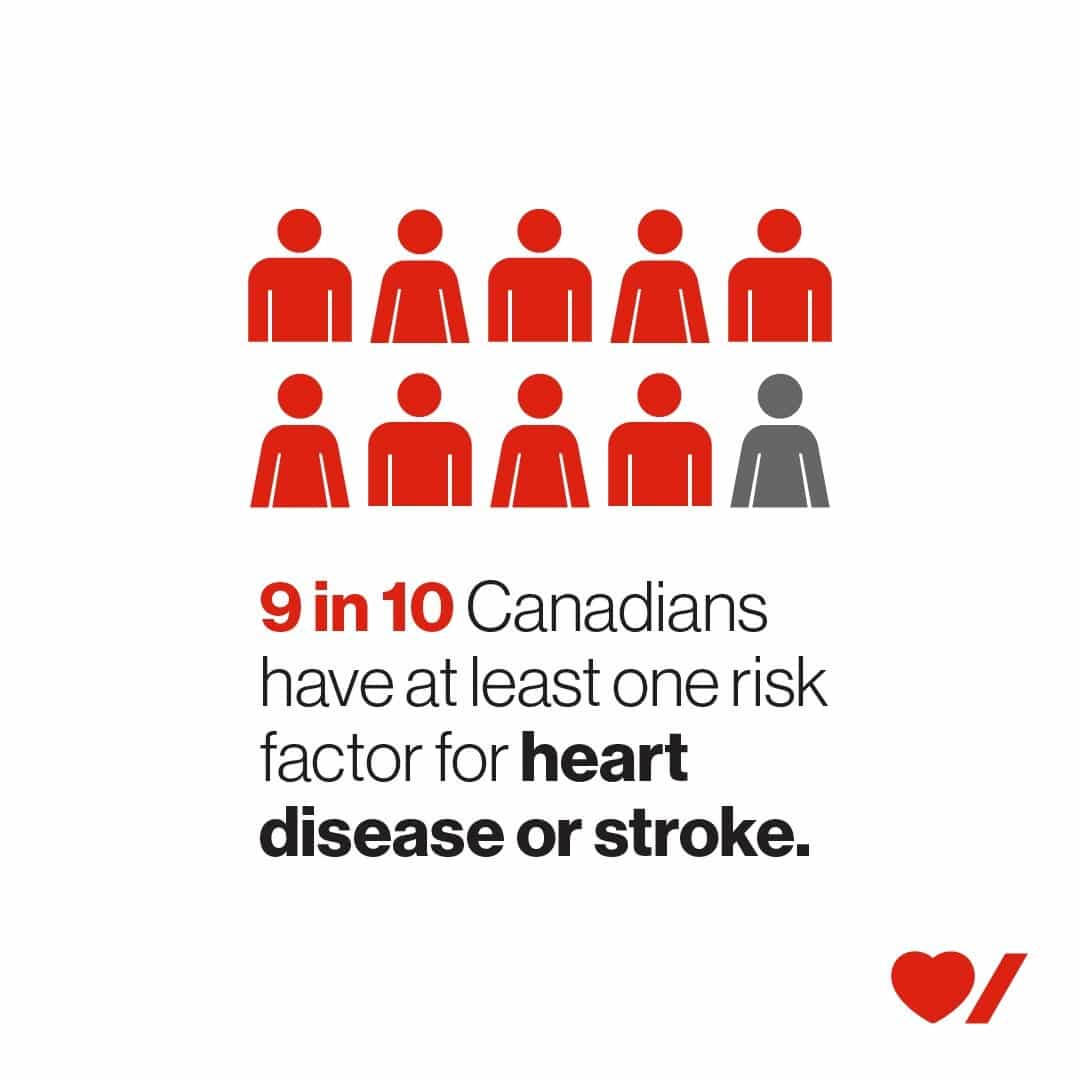
“While there have been advances around understanding, reducing and managing risk, nine in 10 people in Canada have at least one key modifiable risk factor for heart disease and stroke,” says Doug Roth, CEO, Heart & Stroke. “The good news is that almost 80% of premature heart disease and stroke can be prevented by making healthy lifestyle changes and other risk factors such as high blood pressure and cholesterol can often be effectively managed and controlled through lifestyle changes and medication.”
According to a recent Heart & Stroke poll* while only half of Canadians know their own risk for heart disease and stroke, more than nine in 10 recognize the importance of taking action to prevent heart disease and stroke, including by understanding, reducing and managing their personal risk factors.
Highlights from the report
Lifestyle risk factors
- Adult smoking rates have decreased dramatically from 50% in 1965 to 11% in 2024 but smoking remains the leading cause of preventable death and disability, killing 46,000 Canadians each year.
- More than one in four grade 12 students vape.
- Only about half of adults meet their weekly physical activity recommendations. Just over half of children and only two in 10 youth meet their daily physical activity recommendations.
- Fruit and vegetable consumption has been declining since 2015 across all age groups. Currently nearly eight in 10 adults and youth eat limited amounts of fruits and vegetables (fewer than five times per day).
- Almost eight in 10 Canadians report meeting the daily sleep recommendations.
- Nearly one in four adults report that most days are quite a bit or extremely stressful, and this rate has generally been stable since 2015.
Medical risk factors
- The number of Canadian adults living with high blood pressure has increased each year since 2000. More than 8.2 million adults have been diagnosed with high blood pressure. High blood pressure is the number one risk for stroke and a major risk for heart disease.
- More than one in four Canadian adults has high cholesterol.
- More than 3.9 million Canadians (all ages) are living with diabetes – more than three times the amount since 2000.
Non modifiable risk factors
- A substantial proportion of an individual’s cardiovascular risk is based on their genetics.
- Age is a risk factor for heart disease and stroke – as an individual’s age increases, so does their risk.
- Women face some distinct risk factors for heart disease and stroke and at different points in their lives, including during their reproductive years, and around menopause and after menopause.
- For Indigenous peoples in Canada, settler colonialism has created conditions that have led to wide disparities in health outcomes, including a higher risk of heart disease and stroke.
- Some racialized groups face a bigger burden of heart disease and stroke risk including Black Canadians and those of South Asian descent.
“When people hear ‘family history,’ they usually think about genetics, and that’s important because genes do account for a lot of risk. But families also pass down lifestyle habits, and communities do the same. Healthy habits spread, but unfortunately unhealthy habits spread just as easily,” says Dr. Guillaume Paré, professor, pathology and molecular medicine, McMaster University and a Heart & Stroke funded researcher.
The report also reveals that more than 6 million people in Canada are living with heart disease or stroke – a number higher than previously estimated. At the same time, the death rate from heart disease and stroke has decreased by more than 80% over the past seven decades. Heart & Stroke, along with key partners, has contributed to this progress by funding groundbreaking research, increasing awareness and understanding, advancing health systems, and advocating for supportive public policies.
Addressing risk factors in Canada
What individuals can do
- Take the Heart & Stroke Risk Screen tool which will help them to understand their risks and supports them to take action. Built on the most up-to-date evidence, it is free, and easy to complete.
- Anyone with a family history of premature heart disease or stroke should have early and ongoing discussions with their healthcare providers.
What healthcare providers can do
- Speak with your patients about risk factors for heart disease and stroke and recommend credible information and tools.
- Provide counselling around lifestyle risk factors and screen for high blood pressure, high cholesterol and diabetes.
What governments can do
- Implement policies that support healthy eating, physical activity, tobacco and nicotine control, and risk factor reduction, management and control.
For more information:
- Read the report
- Heart & Stroke Risk Screen tool
- Heartandstroke.ca
About Heart & Stroke
Life. We don’t want you to miss it. That’s why Heart & Stroke has been leading the fight to beat heart disease and stroke for more than 70 years. We must generate the next medical breakthroughs, so Canadians don’t miss out on precious moments. Together, with the generous support of our donors, partners and volunteers we are working to prevent disease, save lives and promote recovery through research, health promotion and public policy. heartandstroke.ca @heartandstroke
*National, bilingual online poll of 2842 Canadian residents between the ages of 30-74 years, carried out May 8 to 22 2025 by Ipsos
SOURCE Heart and Stroke Foundation
