
Three Canadian penny stocks analysts love right now

Small cap stocks have shown some life since large-cap tech stocks stumbled in October. In a November 10 Motley Fool article published by Yahoo Finance, David Dierking argues that the rebound could have further to run. He points to expectations for faster earnings growth, reasonable valuations and less exposure to questions about how much big tech is spending on artificial intelligence.
Dierking compares six U.S. small-cap ETFs and favours broad exposure over a value tilt in the near term. For the longer haul, he prefers the iShares Core S&P Small-Cap ETF. It tracks the S&P SmallCap 600, which screens companies for profitability before admitting them to the index.
That emphasis on earnings is a useful starting point for looking at individual stocks in Canada. A share price under 50 cents tells you little about whether a company can pay its bills or turn growth into profit. Here are three Canadian tech stocks that are trading under a buck, what analysts see in them and what each company still has to prove.
Xtract One Technologies (TSX: XTRA) — $0.41
Xtract One (Xtract One Stock Quote, Chart, News, Analysts, Financials TSX:XTRA) makes weapons-screening systems for schools, hospitals, workplaces and venues. In October, the Willis Independent School District in Texas approved a US$973,000 purchase of 15 systems after hearing positive feedback from another district using the technology. Xtract One said the systems would be used at high schools, middle schools and district events.
Ventum Capital Markets analyst Rob Goff reiterated his Buy rating and $1.15 target in an October 16 research note. He pointed to growing demand in North America and Europe and highlighted Xtract One’s British Museum contract as a reference for prospective European customers. He also flagged a wrinkle in the numbers. The mix of upfront equipment sales and recurring contracts can make quarterly results uneven as the company shifts toward more recurring revenue.
“Fiscal 2026 was the year Xtract One proved it could scale,” CEO Peter Evans said when the company reported results. Full-year revenue rose 108% to $28.8 million, while operating expenses increased 13%. The company generated cash from operations in the fourth quarter, though it used $3.5 million in operating cash over the full year.
Fourth-quarter revenue of $8.2 million fell short of Goff’s $9.0 million forecast. Full-year gross margin fell to 58% from 66% as the newer Gateway system accounted for more installations and carried higher initial production and installation costs.
Contractual backlog reached $25.6 million at fiscal year-end, up 66%. Xtract One expected to recognize $10.5 million of that as revenue over the following 12 months. The figures to watch in fiscal 2027 are how much of that backlog comes through on schedule and whether gross margins recover as the company gets more experience building and installing Gateway systems. Goff’s target predates the October 21 results.
Nanalysis Scientific (TSXV: NSCI) — $0.11
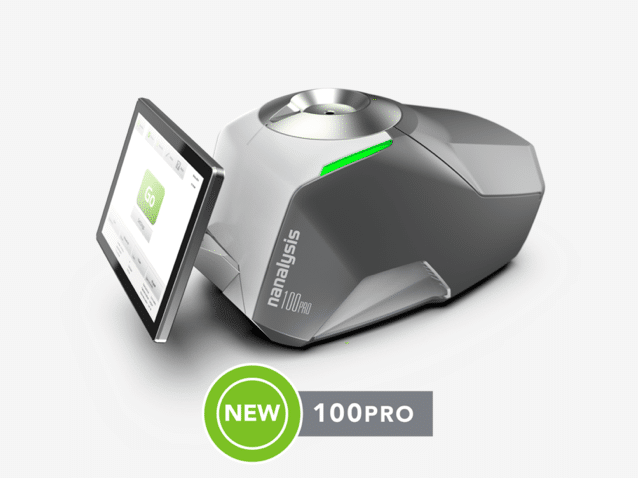
Calgary-based Nanalysis (Nanalysis Stock Quote, Chart, News, Analysts, Financials TSXV:NCSI)sells benchtop nuclear magnetic resonance instruments used to analyze materials in research and industry. It also has a security services business that includes airport equipment maintenance. The two businesses have very different margins. In the second quarter, the company reported a 65% gross margin on product sales and 12% on services revenue.
Leede Financial analyst Douglas Loe maintained his Speculative Buy rating and $0.40 target on August 24. He saw improving profitability and cash flow, even as sales of the core NMR systems remained below historical levels. In his analysis, equipment sales rose to $2.8 million from $2.2 million in the first quarter. His investment case rests on wider adoption of the company’s 60 MHz and 100 MHz instruments and better cost control in services.
“Security Services continued to demonstrate improved margins and operating performance,” founder and CEO Sean Krakiwsky said in the second-quarter release. On a year-over-year basis, services gross margin rose from 10% to 12%. Overall revenue increased 1.5% to $9.7 million, while adjusted EBITDA rose to $881,000 from a loss of $462,000. The company still recorded a net loss of $666,000.
The November 3 update gave shareholders a more immediate figure to watch. Nanalysis issued two million shares to cover $240,000 in annual interest on $2 million of unsecured promissory notes. The notes carry a 12% interest rate and mature in June 2027. Paying in shares conserved cash and diluted existing shareholders.
Loe’s August target assumes $10.9 million in adjusted EBITDA by fiscal 2028, a substantial step up from the $4.4 million he forecast for 2026. Before investors get to that 2028 forecast, they’ll have a nearer-term test of the turnaround in how Nanalysis handles the June 2027 maturity.
Maritime Launch Services (TSX: MAXQ) — $0.45
Maritime Launch Services (Maritime Launch Services Stock Quote, Chart, News, Analysts, Financials TSX:MAXQ) is developing Spaceport Nova Scotia near Canso for commercial satellite operators and government customers. Its location gives rockets a path out over the Atlantic and access to a range of orbital trajectories. The business depends on how much launch capacity customers are willing to commit to and how quickly the company can bring its facilities into service.
Beacon Securities analyst Russell Stanley maintained his Buy rating and $1.50 target in a November 2 report. He said the move to the Toronto Stock Exchange could broaden the company’s investor base. His bigger point was about capacity. He called Maritime Launch “the only publicly traded pureplay on launch site access” and argued that demand could rise as satellite operators compete for launch slots.
Stanley said agreements with two customers represent about $360 million in payments over 10 years. Germany’s Isar Aerospace made an initial US$3.75 million payment in August, and Stanley estimated in November that Maritime Launch was receiving more than $10 million in quarterly cash payments. He expected the next quarterly report to be the first to reflect payments from both customers.
Two of the four launch pads planned for the spaceport’s first phase are covered by long-term agreements, according to Stanley. That leaves room to sign more customers. In the meantime, cash receipts from the existing agreements and the handover of Isar’s dedicated pad will show how far the company has moved from signing customers to getting them ready to launch.
Tara Whittet
Writer
Tara Whittet is Senior Sales Manager at Cantech Letter.
Related Posts

Beacon Securities analyst Russell Stanley maintained his “Buy” rating and $1.50 target on Maritime Launch Services (Maritime Launch Services Stock...

Maritime Launch Services’ (Maritime Launch Services Stock Quote, Chart, News, Analysts, Financials CBOE:MAXQ) Q2 results showed the first meaningful revenue...