
This Canadian biotech stock is undervalued, analyst says


Medicenna Therapeutics’ (Medicenna Therapeutics Stock Quote, Chart, News, Analysts, Financials TSX:MDNA) experimental cancer treatment MDNA11 produced encouraging responses in patients with gastrointestinal cancers that had stopped responding to existing immunotherapies, potentially strengthening the company’s prospects for a pharmaceutical partnership.
Research Capital Corporation analyst Andre Uddin maintained his “Speculative Buy” rating and C$1.60 target on the Toronto-based biotechnology company following clinical results presented at the Society for Immunotherapy of Cancer annual meeting in Phoenix.
In his Nov. 9 report, Uddin said results from Medicenna’s ongoing Phase 1/2 ABILITY-1 trial demonstrate the potential of MDNA11, both alone and in combination with Merck’s Keytruda (pembrolizumab).
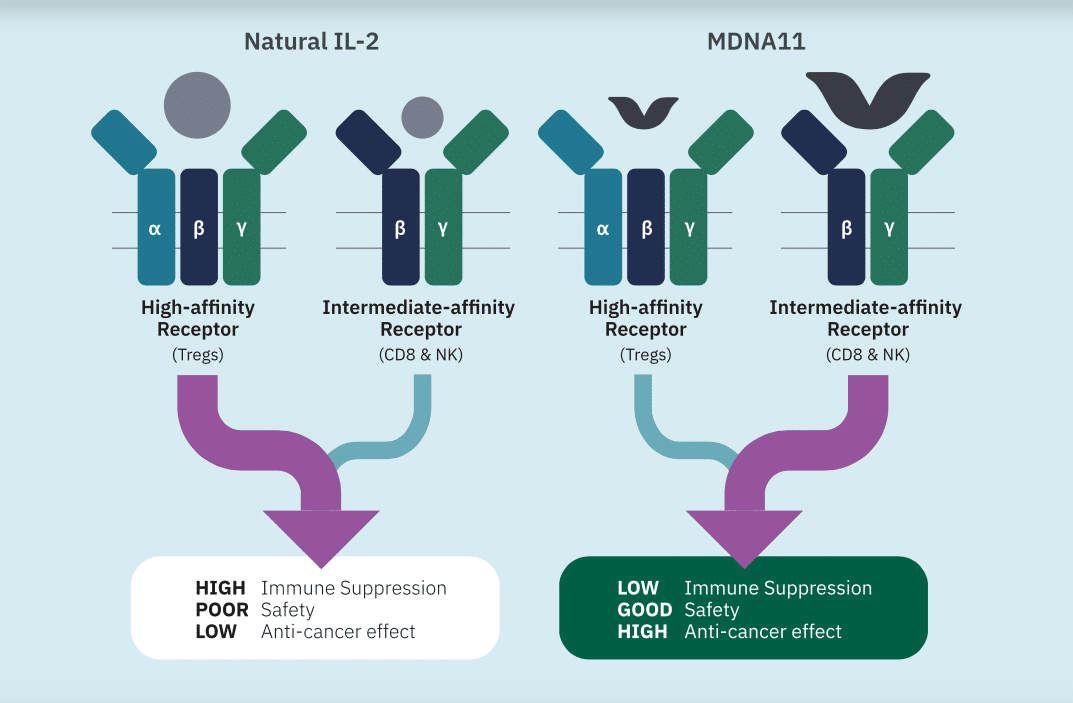
“Today’s data reinforces our view that MDNA11 is a highly-differentiated IL-2-based drug candidate,” Uddin wrote. “Older IL-2 therapies required frequent hospital infusions and caused severe side effects. In contrast, MDNA11 is designed for administration once every two weeks and has demonstrated encouraging efficacy and a favorable safety profile.”
MDNA11 is an engineered interleukin-2 therapy designed to stimulate immune cells that attack cancer. Among 11 patients with treatment-resistant gastrointestinal cancers receiving MDNA11 alone, four experienced measurable tumour responses, representing an objective response rate of 36%. Nine patients, or 82%, achieved disease control. Across 20 patients receiving MDNA11 alone or in combination with Keytruda, the objective response rate was 40%, while 80% achieved disease control. Median response duration had not been reached after more than 32 weeks, with four responses continuing.
Uddin thinks the results are encouraging because the trial targets patients whose cancers have progressed despite treatment with checkpoint inhibitors.
“These patients may initially respond to checkpoint inhibitors, with ORRs ranging from 18% to 45% across multiple GI cancers. However, following disease progression on checkpoint inhibitor therapy, ORRs can decline to approximately 11%, or up to 13% with chemotherapy or targeted therapy combinations,” he said.
The analyst estimates that between 4,000 and 9,000 U.S. patients have gastrointestinal cancers that no longer respond to checkpoint inhibitor treatment.
The trial also produced encouraging safety results. More than 90% of treatment-related adverse events were mild or moderate, and no dose-limiting toxicities were reported at doses up to 120 micrograms per kilogram. One severe case of cytokine release syndrome resolved within four days. No treatment-related deaths were reported.
Medicenna is also evaluating MDNA11 in melanoma and endometrial cancer. Preliminary results showed response rates of 30% among 10 melanoma patients receiving MDNA11 alone, 38% among eight melanoma patients receiving combination treatment and 28.6% among seven endometrial cancer patients receiving combination therapy.
“We believe MDNA11’s compelling clinical readouts should help the company find a big pharma or major biotech partner,” Uddin said.
-30-
Nick Waddell
Founder of Cantech Letter
Cantech Letter founder and editor Nick Waddell has lived in five Canadian provinces and is proud of his country's often overlooked contributions to the world of science and technology. Waddell takes a regular shift on the Canadian media circuit, making appearances on CTV, CBC and BNN, and contributing to publications such as Canadian Business and Business Insider.
Related Posts
Research Capital analyst Andre Uddin says upcoming clinical readouts could be meaningful catalysts for Medicenna Therapeutics (Medicenna Therapeutics Stock Quote,...
Research Capital analyst Andre Uddin says Medicenna Therapeutics (Medicenna Therapeutics Stock Quote, Chart, News, Analysts, Financials TSX:MDNA) has upcoming clinical...