
RBC trims price target on Telesat

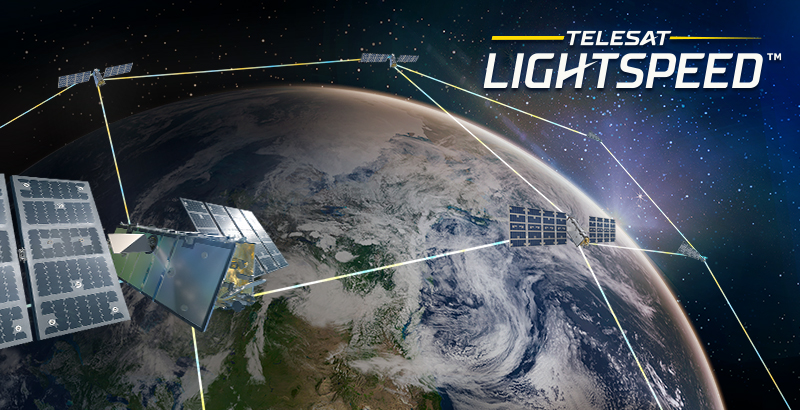
On Nov. 2, RBC Capital Markets analyst Drew McReynolds lowered his target on Telesat (Telesat Stock Quote, Chart, News, Analysts, Financials TSX:TSAT) to $94.00 from $95.00, citing a modest delay in the rollout of its Lightspeed satellite network, but the analyst maintained his “Outperform” rating and positive outlook for the company’s long-term growth prospects.
McReynolds said Telesat’s third-quarter results were broadly in line with expectations, while the company’s $2.7-billion agreement with the Canadian government provides greater revenue visibility for its next-generation satellite network. The average analyst target is $88.87.
“Underlying Q3/26 results were in line and GEO guidance was reiterated. The timeline for full global Lightspeed service was shifted from Q1/28 to Q2/28,” McReynolds said. “Following minor estimate revisions, our price target decreases.”
Telesat reported third-quarter revenue of $81-million, down 20% year-over-year, while Adjusted EBITDA declined 74% to $12-million. The company recorded a net loss of $157-million, compared with a loss of $121-million a year earlier. Revenue from its geostationary satellite (GEO) business declined 21% to $79-million, reflecting lost broadcast contracts, reduced customer demand and the retirement of certain satellites. GEO Adjusted EBITDA fell 43% to $36-million, although the results included $25-million in debt refinancing expenses. Excluding those costs, the segment’s Adjusted EBITDA declined 23%, with margins remaining relatively stable at 78%. Telesat reaffirmed its 2026 GEO revenue guidance of $300-million to $320-million and Adjusted EBITDA guidance of $210-million to $230-million, excluding non-recurring refinancing expenses.
McReynolds argues that the company’s longer-term investment case centres on Telesat Lightspeed, its planned low-Earth-orbit (LEO) satellite network targeting enterprise, government and defence customers.
“With the 2028 commercialization of a cutting-edge LEO constellation, we believe Telesat is very well positioned to capitalize on a large and growing B2B LEO satellite TAM that is benefiting from multiple structural demand drivers including a rapidly growing global defence industry,” he said.
Telesat expanded the planned Lightspeed constellation to 225 satellites from 156 following its agreement with Canada’s Defence Investment Agency. The agreement, valued at $2.7-billion including option periods, will provide military satellite communications services to the Canadian Armed Forces under the Enhanced Satellite Communications Project – Polar program.
It includes approximately $2-billion in milestone payments expected between the third quarter of 2026 and the fourth quarter of 2028, principally supporting the additional satellites.
Telesat CEO Dan Goldberg described the agreement as an important validation of Lightspeed’s potential in government and defence markets.
“We see this initial ESCP-P contract as just the first step in a very attractive pipeline of government and defence opportunities with Canada and allied countries,” Goldberg said.
Telesat ended September with approximately $5.6-billion in LEO backlog, compared with $779-million in its existing GEO business. The company invested $368-million in Lightspeed during the quarter and reduced its full-year 2026 spending forecast to $1.1-billion to $1.3-billion from $1.3-billion to $1.5-billion, reflecting revised payment schedules.
Despite the growth opportunity, McReynolds cautioned that uncertainty surrounding the refinancing of Telesat’s GEO debt remains a significant concern for investors.
“While we expect refinancing and capital structure uncertainty to remain a meaningful overhang for the stock pending Telesat GEO creditor resolution, we believe strong strategic and financial government alignment improves Telesat’s growth and risk profile,” he said. He believes government support should help Telesat manage development risks while providing a foundation for longer-term revenue growth and access to additional financing.
McReynolds retained his “Speculative” risk designation, reflecting the fact that Lightspeed has yet to begin commercial operations and the GEO refinancing remains unresolved.
Telesat expects to begin high-latitude Lightspeed commercial service around the end of the first quarter of 2028, with full global service now anticipated in the second quarter.
-30-
Rod Weatherbie
Writer
Rod Weatherbie is a journalist based in Prince Edward Island. Since 2004, he has written extensively about the Canadian property and casualty insurance landscape. He was also a founder and contributing editor for a Toronto-based arts website and a PEI-based food magazine. His fiction and poetry have been featured in The Fiddlehead, The Antigonish Review, and Juniper.