
Ripple CEO says crypto a great investment for the “next ten years”

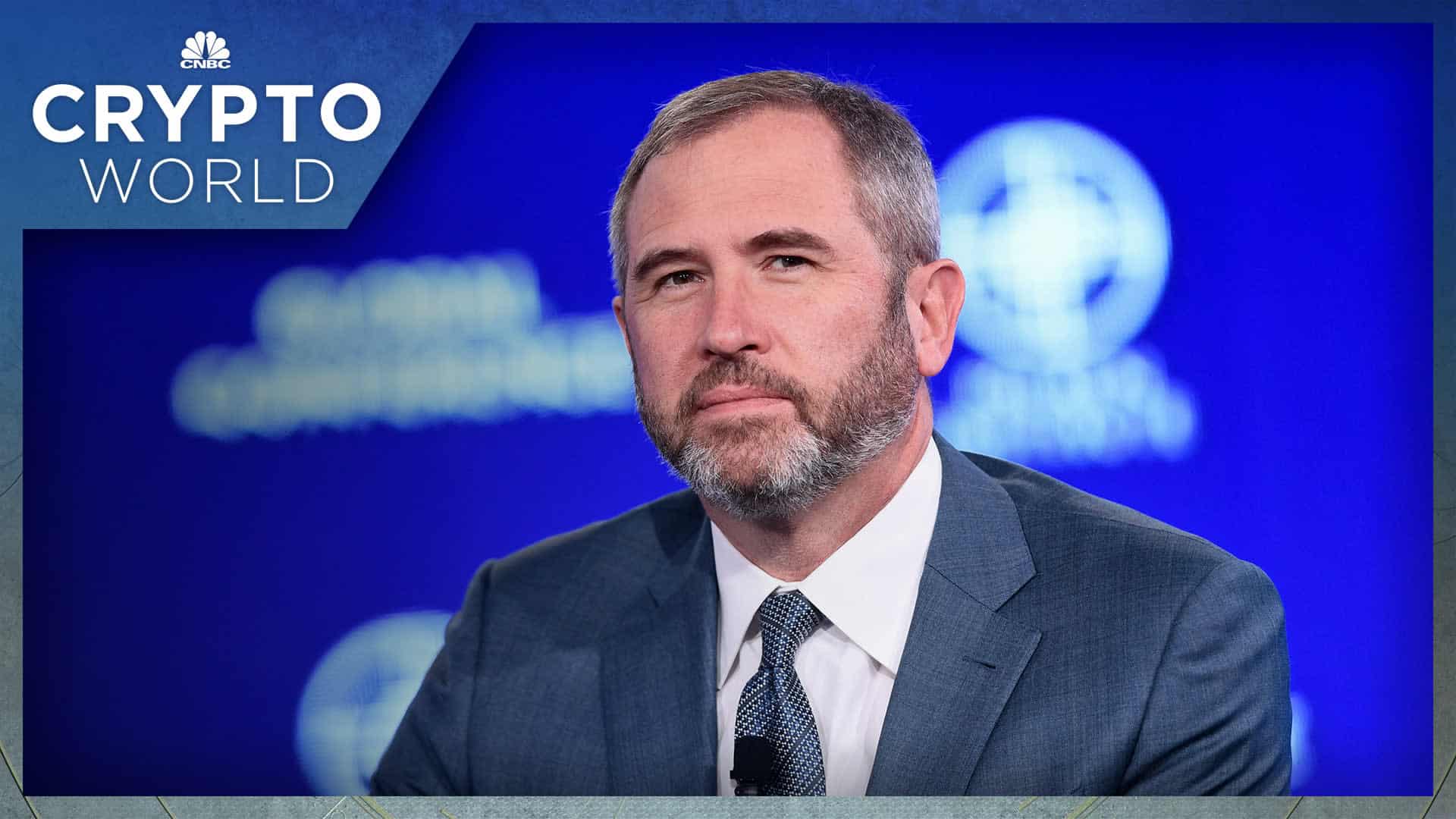
Ripple CEO Brad Garlinghouse said he expects cryptocurrency markets to reach a new all-time high in 2026, citing a sharp shift in U.S. policy, accelerating institutional adoption and growing real-world use cases for digital assets.
Speaking with CNBC’s Arjun Kharpal at the Davos 2026 World Economic Forum, Garlinghouse said the industry has moved from regulatory headwinds to tailwinds, a change he believes is still underappreciated by markets.
“I’m very bullish. I’ll go on record and say I think we’ll see an all-time high,” Garlinghouse said. “The largest economy in the world went from being pretty openly hostile to crypto to now having tailwinds. That’s a massive sea change, and I don’t think that’s fully priced in yet.”
Garlinghouse pointed to U.S. legislative progress, including the passage of the Genius Act last summer, as a catalyst for increased activity across the sector. While the Clarity Act remains stalled, he said momentum toward a clearer regulatory framework is building.
“The amount of interest from major financial institutions is a massive shift,” he said. “If we want institutions to lean in meaningfully, we need things like the Genius Act and the Clarity Act so they’re not worried about what the next SEC chair might change.”
On market structure, Garlinghouse said Bitcoin will likely remain the bellwether asset but argued that other technologies are gaining relevance as institutions focus on scalable, problem-solving use cases.
“While Bitcoin is a great store of value and in many ways a digital gold, you’re not seeing it scale into solving kind of payments and you’re seeing technologies like XRP solve that use case,” he said.
Asked about optimistic price forecasts for XRP, Garlinghouse declined to comment on valuation, reiterating his long-standing stance.
“I’ve made it a practice not to comment on the price of XRP,” he said. “What matters long term is what problems you’re solving, whether they scale, and whether they remove friction from existing transactions.”
Garlinghouse also said stablecoins are set for another year of rapid growth, particularly in institutional settings, highlighting Ripple’s own U.S.-regulated stablecoin, RLUSD.
“Stablecoins are going to continue to scale in a very big way,” he said. “For institutional use cases, you have to be regulated, compliant and transparent. That’s where we’re focused.”
On competition, Garlinghouse said he expects Binance to re-enter the U.S. market, a move he views as constructive for the industry.
“Competition is a very good thing,” he said. “It brings more people into the market and lowers pricing, which helps grow the next 50 million users.”
Garlinghouse said Ripple’s recent acquisition strategy reflects a broader effort to move crypto beyond its traditional echo chamber. He highlighted two deals in particular: the roughly $1.2-billion purchase of prime broker Hidden Road and the acquisition of treasury management software provider G Treasury.
“If the crypto industry is going to emerge from being kind of a small cottage piece of the financial industry to more major, you need counterparties, you need prime brokerage services that compete with and scale with the largest players,” he said. “We bought G Treasury as a way to introduce those customers to technologies and blockchain technologies and crypto solutions, stable coins that those customers don’t even know exist. So we view it as a distribution mechanism that can really accelerate the growth. And look, if I were to critique the crypto industry, a lot of the acquisitions that happen are inside the echo chamber. We need to expand the echo chamber.”
He added that corporate treasurers are increasingly reassessing how they manage liquidity and payments amid currency depreciation and operational frictions.
“The U.S. dollar depreciated about 30% over the last five years,” Garlinghouse said. “You have CEOs in boardrooms around the world asking their CFO, Hey, should we be using these technologies? Can we get better yield on our dormant deposits? Can we now do payroll more efficiently? If I need to make a payment after the wire cut-off, how do I do that? Those are easy things to do in the world I live in.”
Garlinghouse said the tone around crypto at Davos has matured compared with earlier cycles, with less hype and more focus on sustainable business models. He said it’s just like the internet after 2000, this next decade will be about scaling profitably and removing friction from real transactions and he predicts that companies that don’t even exist yet will emerge to do exactly that.
“Crypto is settling into a really nice opportunity for the next ten years,” he said.
-30-
Rod Weatherbie
Writer
Rod Weatherbie is a journalist based in Prince Edward Island. Since 2004, he has written extensively about the Canadian property and casualty insurance landscape. He was also a founder and contributing editor for a Toronto-based arts website and a PEI-based food magazine. His fiction and poetry have been featured in The Fiddlehead, The Antigonish Review, and Juniper.