
Satellos Bioscience is undervalued, Leede says

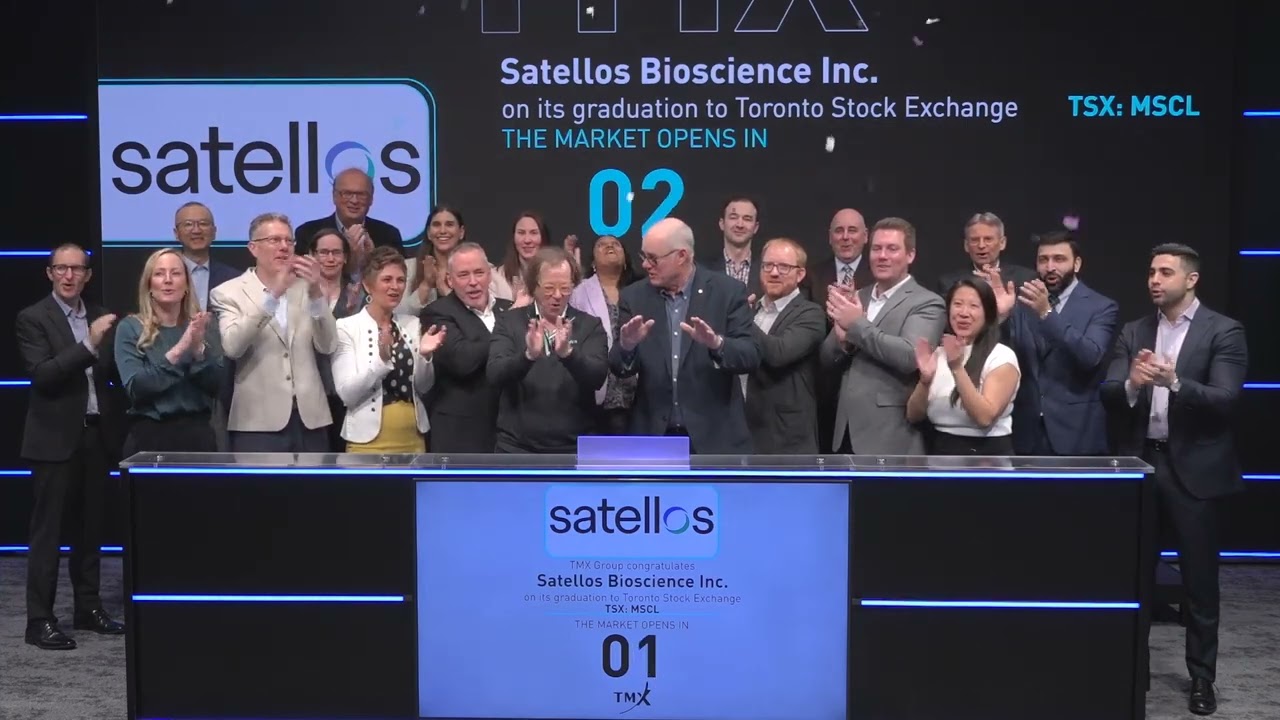
Leede Financial analyst Douglas Loe initiated coverage of Satellos Bioscience (Satellos Bioscience Stock Quote, Chart, News, Analysts, Financials TSX:MSCL) on January 28 with a “Speculative Buy” rating and a one-year price target of $2.25, citing the company’s differentiated approach to treating Duchenne muscular dystrophy (DMD) and multiple upcoming clinical catalysts.
Satellos is a Toronto-based, clinical-stage biotechnology company focused on developing therapies for degenerative muscle diseases, with its lead program targeting DMD. The company’s flagship asset, SAT-3247, is an orally administered, small-molecule inhibitor of adaptor-associated protein kinase 1 (AAK1) and is currently in Phase II development.
At current levels, Loe said his $2.25 target implies a one-year return of roughly 68%, which he believes is achievable based on the upcoming Phase I/II clinical milestones and the differentiated nature of SAT-3247’s regenerative approach to Duchenne muscular dystrophy…
Loe said SAT-3247 stands apart from existing and emerging DMD therapies by pursuing a regenerative mechanism aimed at restoring muscle function, rather than attempting to increase dystrophin production through RNA- or adeno-associated virus (AAV)-based gene therapies. Those approaches, he noted, have shown limited efficacy in patients with mutations affecting the dystrophin gene.
Interim Phase II data from two separate clinical studies—one in adult patients and one in pediatric patients—are expected before year-end. Loe said these readouts represent near-term catalysts that could materially impact the stock.
Leede’s valuation is based on a net present value framework using a 30% discount rate, which Loe said is appropriate for a Phase II-stage drug developer, alongside multiples applied to forecast fiscal 2031 EBITDA and EPS of US$81.0-million and US$0.26 per share, respectively. The enterprise value calculation is anchored to fiscal Q3 2024 balance sheet data, including US$19.3-million in cash and no long-term debt, and assumes a notional fully diluted share count of 231.4 million, reflecting the potential need for additional equity financing to fund ongoing clinical and regulatory activities.
Loe’s model assumes Phase III testing for SAT-3247 could begin in fiscal 2027, with efficacy data available by fiscal 2029. On that timeline, he expects potential FDA approval and a partnered commercial launch in fiscal 2030. The model forecasts first-year U.S. royalty revenue and EBITDA of US$31.5-million and US$9.1-million, respectively, rising to US$102.9-million in revenue and US$81.0-million in EBITDA in fiscal 2031, the first full year of U.S. commercialization, with additional contributions from EU and U.K. sales beginning in the back half of fiscal 2031. Revenue and EBITDA are projected to increase further to US$165.0-million and US$146.4-million in fiscal 2032.
Loe said Satellos could attract interest from larger pharmaceutical partners or acquirers as SAT-3247 advances, particularly firms with existing rare disease or DMD franchises, though his valuation does not explicitly ascribe value to that possibility. He also noted that Satellos recently announced a 12-for-one share consolidation, which Leede expects to incorporate into its model once completed.
At current levels, Loe said his $2.25 target implies a one-year return of roughly 68%, which he believes is achievable based on the upcoming Phase I/II clinical milestones and the differentiated nature of SAT-3247’s regenerative approach to Duchenne muscular dystrophy.
Loe said Satellos is expected to post a US$21.0-million Adjusted EBITDA loss on revenue of US$20.6-million in fiscal 2029, reflecting continued clinical development spending ahead of commercialization. He expects those figures to improve to Adjusted EBITDA of US$9.1-million on revenue of US$7.1-million in fiscal 2030, as SAT-3247 advances toward approval and initial royalty contributions begin to emerge.
-30-
Rod Weatherbie
Writer
Rod Weatherbie is a journalist based in Prince Edward Island. Since 2004, he has written extensively about the Canadian property and casualty insurance landscape. He was also a founder and contributing editor for a Toronto-based arts website and a PEI-based food magazine. His fiction and poetry have been featured in The Fiddlehead, The Antigonish Review, and Juniper.
Related Posts
Leede analyst Doug Loe reiterated a “Speculative Buy” rating on Toronto-based Satellos Bioscience (Satellos Bioscience Stock Quote, Chart, News, Analysts,...