
Electric Vehicle drivers are really worried about being stranded, says Canadian study

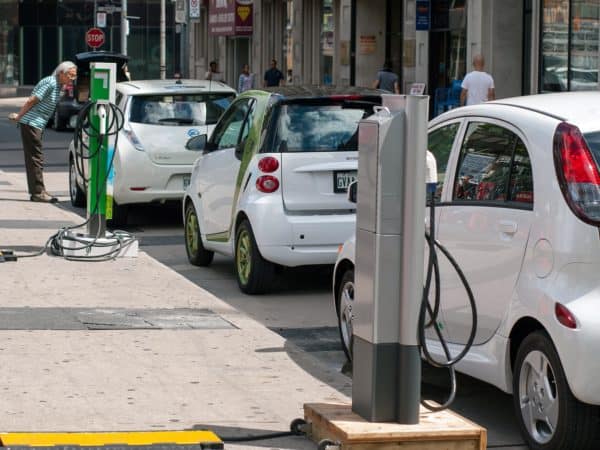
It sounds like a boozy claim at a party that can be settled with a simple Google search. But many rational people will find themselves on the wrong end of this one. Electric Vehicle Range Anxiety is a thing. It’s true. They did a study.
By “they” I mean a group called The Toronto Atmospheric Fund, which conducted a five-year (five!) study into the habits of corporate fleet managers in the Toronto area. The rest of us are left to presume there was a four-year study into the habits of corporate fleet managers in the Toronto area the organization felt wasn’t comprehensive enough.
But I jest.
The resulting paper, entitled “FLEETWISE EV300 Findings Report on EV Usage in Sixteen GTA Fleets” was earnest in its intentions. It took a comprehensive look at the data generated by fleets who use vehicles such as the Nissan Leaf, the Chevrolet Volt, and the Toyota Prius Plug-in to find patterns that might affect adoption of electric cars. One of the most interesting findings of the comprehensive report is that drivers of electric vehicles often suffer from “Range Anxiety”. What is range anxiety? It’s the uncertainty that a driver’s electric vehicle has the necessary juice to complete its route. And it’s a major consideration for fleet managers, according to the report.
Some chargers use different plugs than others, and when you are done with all that, you have to put your life on hold for at least 30 minutes to get enough charge to make a difference. No wonder electric cars haven’t gone mainstream yet.
“The impact doesn’t stop at drivers’ feelings. Their fears translate into serious underuse of all-electric vehicles’ capacity, which not only undermines their contribution to the fleet’s work, but reduces potential maximum fuel savings and cuts down on potential reductions in GHG emissions. If severe enough, fallout from range anxiety can put the entire economic justification for conversion to EVs in jeopardy,” says the study.
So what can be done to quell this thoroughly modern condition? The study says fleet operators can ensure drivers that vehicles are properly charged and inform them of ways to extend the battery life, such as limiting use of air conditioning. It adds that operators can equip drivers with reliable navigation tools to mitigate the risk of unexpected trips.
Blogger Steve Hanley says the mindset of an electric vehicle driver still differs greatly from those of us who simply hit up the nearest Chevron and it is, in fact, a barrier to adoption.
“Public electric chargers are often hidden,” he points out. “You need a smartphone app to find them and when you get there, the nearest charger may already be in use. Either that, or it is part of a network you don’t belong to. Some chargers use different plugs than others, and when you are done with all that, you have to put your life on hold for at least 30 minutes to get enough charge to make a difference. No wonder electric cars haven’t gone mainstream yet.”
Recent numbers suggest sales of hybrid and electric vehicles are underwhelming. In July, General Motors reported that Chevrolet Volt sales fell 31% in June to a measly 1,225. In the whole first half of 2015, the company sold just 5,622 Volts. Not exactly Detroit in its heyday.
Launched in February, 2010, the Toronto Atmospheric Fund’s EV300 Program aims to help public and private organizations shift portions of their fleets to plug-in hybrids and all-electric vehicles.
Nick Waddell
Founder of Cantech Letter
Cantech Letter founder and editor Nick Waddell has lived in five Canadian provinces and is proud of his country's often overlooked contributions to the world of science and technology. Waddell takes a regular shift on the Canadian media circuit, making appearances on CTV, CBC and BNN, and contributing to publications such as Canadian Business and Business Insider.