
Why did Target fail in Canada? Here’s the real reason

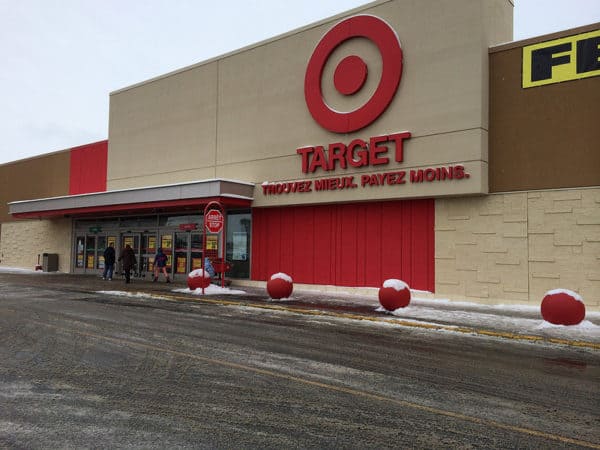
What caused the Target Canada failure? Target is currently wrapping up an expensive and embarrassing Canadian experiment. A liquidation of the company’s assets has been underway for nearly two months, and snapshots of its increasingly barren shelves have been a mainstay of media coverage since February.
The U.S. retail giant decided to enter Canada in 2011, with the purchase of 220 Zellers locations for approximately $1.8 billion. It is now leaving with a more than (U.S.) $2-billion hole in its balance sheet.
What went wrong?
Ivey Business School marketing professor Kersi Antia said Target made some clear mistakes upon entering the Canadian market.
“The plan to open so many stores in such a short period resulted from an opportunistic takeover of Zellers, which came back to bite them in the butt because it was too aggressive,” he says. “And instead of taking time to really understand our market, Target acted like it wasn’t even expanding across a border. The company entered Canada as if it was the 51st state. These mistakes cost them dearly.”
What caused the Target Canada failure? There are many attempts at explanations…
Some blame a botched supply chain that piled up goods in warehouses due to mismatched bar codes. Some say it was an ill-timed and well publicized data breach. Others point to prices that weren’t competitive and merchandise that was consistently out of stock.
But one major reason Target failed in Canada gets almost no ink. It’s the varied delights of cross-border shopping.
The cross-border shopping trip has slowly evolved into a Canadian tradition. Of course, prices are often cited as a big reason for this. But many Canadians have come to include shopping as part of the experience of their U.S. trip, or the other way around.
“We have to remember there are many reasons why Canadians love to cross-border shop and only one of those reasons is to save money,” Antonia Mantonakis, a consumer behaviour researcher at Brock University, told The Star recently. “Part of why Canadians love cross-border shopping is the experience of it all. Taking a road trip with friends and family, stopping off for some Buffalo wings, going to the big malls, visiting stores we don’t have in Canada, seeing the different options.”
According to a report from Stats Canada, overnight trips accounted for 45.3% of the goods brought into our country from the U.S. in 2012, compared to 38.9% by mail and just 10.5% from same-day trips.
About three quarters of Canadians live within 160 kilometres of the U.S. border and the amount of stuff we are allowed to bring back has consistently increased. Of course, if we stay a little longer we can bring more stuff back, and this is an increasingly popular option with Canucks.
According to a report from Stats Canada, overnight trips accounted for 45.3% of the goods brought into our country from the U.S. in 2012, compared to 38.9% by mail and just 10.5% from same-day trips.
Talk to most any Canadian and they will tell you they save up or delay the purchase of some things for a trip to the States and make a mini-vacation of it. Increasingly, we are tacking on shopping to a list of activities that may include Disneyland or Las Vegas or a Tampa Bay Lightning hockey game.
And hit the liquor section of any Costco in a U.S. destination and you’ll find snowbirds; they’re the ones raving about the low cost of a pint of Bacardi rum or a bottle of J. Lohr Cabernet Sauvignon.
Canadians love the novelty of shopping at stores we don’t have for things we don’t get north of the border, from a cheeseburger at In-N-Out Burger to a pair of shoes at Nordstrom Rack, or even groceries at Trader Joes.
Our ravenous appetite for American getaways has brought us the most unlikely of things: a bit of a bad reputation.
In Bellingham, Washington, where the Costco store is routinely the destination of shoppers from B.C.’s Lower Mainland, who come for cheap milk or cheese or liquor, some locals have had enough of their touque-wearing neighbours. They put together a Facebook page arguing that locals should have their own designated time to shop there.
“You all been there,” says the page’s “About” section. “The main stay of this town “guide meridian” is LA freeway at rush hour. Its hard to find a parking spot. The lines are crazy. The overcrowding is causing some to be rude. We just want to go shopping like everyone else, not go on an adventure. Costco and other big box companys (sic) in this area need to be allowed to expand or move to larger areas. Bellingham Coscto is in the top ten profitable Costcos but is still top ten smallest stores. What are your ideas? lets make this known so that the city/county officials know that the people want change so we can better accommodate our Canadians neighbors and our own shopping situations.”
Below: Ellen goes shopping at Target, with hilarious results…
Nick Waddell
Founder of Cantech Letter
Cantech Letter founder and editor Nick Waddell has lived in five Canadian provinces and is proud of his country's often overlooked contributions to the world of science and technology. Waddell takes a regular shift on the Canadian media circuit, making appearances on CTV, CBC and BNN, and contributing to publications such as Canadian Business and Business Insider.