
Commemoration of the Great Peace of Montréal of 1701 – Pointe-à-Callière exhibits the Great Peace of Montréal treaty, dating back more than 325 years!
June 20 to September 20, 2026
MONTRÉAL, June 17, 2026 /CNW/ – For the first time in 25 years, Pointe-à-Callière, Montréal’s archaeology and history complex, is pleased to announce the return of the Great Peace Treaty of Montréal. This exceptional agreement between 38 Indigenous nations and representatives of New France was signed in 1701 on the very site where the Museum now stands. This is a rare opportunity for the public to see an invaluable heritage document that remains incredibly significant in the present day.
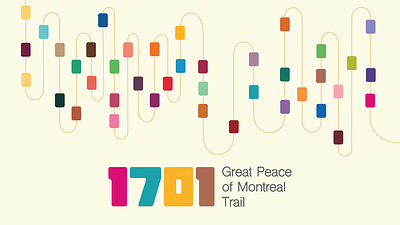
As part of the commemorations marking the 325th anniversary of the signing of this treaty, the Museum is offering an interpretive tour, starting Saturday, June 20, which culminates at the Fort de Ville-Marie – Québecor pavilion, where the only known copy of the treaty will be on display! The presentation will allow visitors to peruse the seven pages of the document from every angle and, notably, to see the pages ratified by the Indigenous delegates alongside the French signatures.
Summer programming will kick off with a Block Party on Sunday, June 21, starting at 1 pm in Place Royale and on the pedestrianized street in front of the Museum. People can enjoy free outdoor activities relating to the overall Great Peace theme, while at the same time celebrating National Indigenous Peoples Day and the summer solstice! The museum will be open until 7 pm for the occasion.
An interpretive journey with 6 stops and 1 treaty
Within its own premises, Pointe-à-Callière is offering a unique interpretive route through the Éperon building, the archaeological crypt, and Fort Ville-Marie. From one station to the next, visitors will have the opportunity to learn about the events that led to the signing of the treaty and to appreciate its historical significance. A perfect way to immerse oneself in the spirit of the place and the peace process.
Designed around the theme of “making alliances,” the tour consists of markers that each evoke a key stage in the Great Peace process: Making Peace, Exchanging, Agreeing, Moving Forward, Negotiating, Committing, Keeping One’s Word.
In certain places, the text is enhanced with an interactive element or video featuring testimonials on the subject of peace. These individual contributions highlight various perspectives on this event:
André Dudemaine. Innu, cofounder of Land InSights. He has been working to promote and revive the arts and cultures of Indigenous peoples for the past thirty-five years. One of the main instigators of the tricentennial commemoration of the Great Peace of Montréal of 1701.
Caroline Monnet. Multidisciplinary artist of Anishinaabe and French ancestry. Her work celebrates dialogue, reconciliation, coexistence, and the transmission of knowledge; named an artist for peace in 2025.
Taiaiake Alfred. Kanien’kehá:ka intellectual from Kahnawa’ke. His work is focused on ancestral teachings and cultural restoration, and he has published four scholarly books on Indigenous governance.
Jennifer Obomsawin. Political scientist of Wendat and W8banaki origin. She works at the political and diplomatic levels to represent Indigenous interests and trains the next generation to exercise their leadership.
Alain Beaulieu. Specialist on the history of relations between Indigenous peoples and Europeans. He is the co-author of a reference work on the Great Peace of Montréal of 1701.
The tour concludes with the exhibition of the treaty itself in a space conducive to appreciation.
The Great Peace of Montréal: a major diplomatic event
To this day, the Great Peace of Montréal remains one of the most important diplomatic gatherings in the history of North America! The Governor of New France, Louis Hector de Callière, played a central role in the negotiations, alongside the great Wendat diplomat Kondiaronk, known for his political influence and oratorical talent.
However, the challenge was huge. It had an extraordinary continental dimension, given the geographical provenance of the participants, the number of Indigenous ambassadors who came to Montreal (around 1,300), and the number of nations involved (38). The agreement brought lasting peace for nearly 60 years.
The spirit of place at Pointe-à-Callière
The archaeological remains of Fort Ville-Marie (1642-c. 1670) and the Callière estate (1688-1765) are located on the site of Montréal’s birthplace. Archaeological discoveries made in recent decades have unearthed objects that bear witness to the gathering. Wampum beads have been found in the soil, as well as fragments of peace pipes. The presence of material culture relating to diplomatic activities is a significant indicator of the site’s political function.
Summer programming relating to the Great Peace of Montréal
18th Century Public Market
A summer highlight, the 33rd edition of the Public Market will be themed around the Corn Festival, as part of the commemoration of the 325th anniversary of the signing of the Great Peace of Montréal. This impressive re-creation of a market day in Montréal under the French Regime is brought to life by various authentic characters who frequented the market, with numerous activities taking place throughout the event.
-
- Saturday, August 29, from 10 am to 7 pm
- Sunday, August 30, from 10 am to 6 pm
Cultural Activities
During the summer, take advantage of free activities for the whole family on Sundays, especially the one on August 9th, which will mark the International Day of the World’s Indigenous Peoples!
-
- Sunday, August 2, 2026, from 1 pm to 4 pm
- Sunday, August 9, 2026, from 1 pm to 4 pm
Explore the full program on Pointe-à-Callière’s website.
Acknowledgements
The exhibition of the Great Peace treaty is made possible through the exceptional collaboration of the Archives nationales d’outre-mer (France), in partnership with Air Canada Cargo and Hôtel Saint-Sulpice.
About
Inaugurated in 1992, on the city’s 350th anniversary, Pointe-à-Callière is now the most-visited history museum in Montréal and the largest archaeology museum in Canada. Rising above a concentrated number of historic and archaeological sites of national significance–including the birthplace of Montréal–, the Museum has a mission to preserve its collections and to further knowledge, while showcasing and fostering an appreciation for Montréal’s archaeological and historical heritage. This mission is carried out through various activities focused on conservation, research, presentation, education, and inclusion, along with community initiatives benefiting both Montrealers and visitors to the city. Pointe-à-Callière, proud partner of the City of Montréal.
SOURCE Société du musée d’archéologie et d’histoire de Montréal Pointe-à-Callière
