
This Canadian cleantech stock is undervalued, analyst says

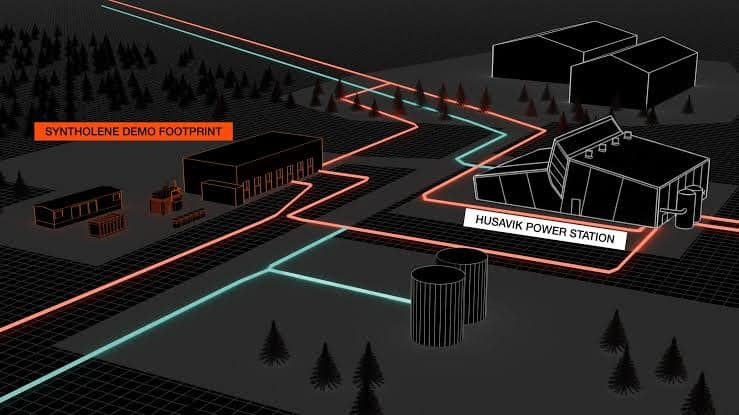
Syntholene Energy’s (Syntholene Energy Stock Quote, Chart, News, Analysts, Financials TSXV:ESAF) proposed $3.5-million financing could help establish whether its geothermal-powered hydrogen production technology can operate competitively at commercial scale, according to Research Capital analyst Greg McLeish.
On Nov. 18, McLeish maintained his “Speculative Buy” rating and $1.00 target on the Canadian energy technology company, saying the funding would advance engineering, permitting and development of its first commercial facility.
“The financing follows independently reviewed proof of performance at Húsavík, Iceland, where Syntholene demonstrated that it could integrate geothermal heat with high-temperature electrolysis to produce hydrogen, a key input for synthetic aviation fuel,” McLeish said.
The proposed non-brokered private placement, led by director and co-founder Canon Bryan, would raise up to $3.5-million through the sale of units priced at $0.25 each. Each unit would comprise one common share and one-half warrant, with each full warrant exercisable at $0.30 for one year. If fully subscribed, the offering would issue 14 million shares and seven million warrants, with the potential to raise another $2.1-million through warrant exercises.
The financing is expected to close around Nov. 30, subject to regulatory approval.
Syntholene is developing a system that combines geothermal heat with high-temperature electrolysis to produce hydrogen for electrolytic sustainable aviation fuel (eSAF). An independent review of the company’s Iceland demonstration by Professor Nigel Brandon found that its electrolyzer consumed an average of 34.9 kilowatt-hours of electricity per kilogram of hydrogen over 713 hours of high-load operation. That was approximately 5.2% below the 36.8 kilowatt-hour reference used in McLeish’s original research. Electricity consumption increased to 38.6 kilowatt-hours per kilogram when auxiliary equipment was included, before accounting for steam generation and geothermal circulation.
However, McLeish cautioned that the demonstration has not yet established the economics of a complete commercial facility. “Hydrogen output was calculated from electrical current, assuming all current contributed to hydrogen production, rather than measured directly with a flow meter,” he said. “Engineers now have measured electrical demand from the demonstration to work from, while the energy requirements and cost of running the full facility still need to be established.”
The company plans to use the financing proceeds for engineering studies, facility design, permit applications and preparation for front-end engineering and design work.
McLeish said the next stage will be important in determining whether Syntholene can translate its demonstration results into a commercially viable project. “For investors, the most important outcome would be a clearer estimate of what the first facility will cost to build and operate,” he said. “Combined with long-term power pricing, those estimates would give prospective fuel buyers and project lenders a firmer basis for evaluating the project.”
The analyst thinks Bryan’s participation in the financing suggests continued commitment from management, although the amount he intends to invest and the extent of other insider participation have not been disclosed. If fully subscribed, the placement would increase Syntholene’s basic shares outstanding from approximately 85 million to 99 million, with the new shares representing about 14% of the post-financing total.
McLeish said his target already incorporates the successful Iceland demonstration and its independent validation.
“The next milestone for valuation is a credible estimate of what the first commercial facility would cost to build and operate,” he said. “Competitive long-term power terms, binding fuel sales agreements and project financing could provide further support for a higher valuation.”
Syntholene remains at the development stage and has yet to generate commercial revenue. Additional capital and engineering work will be required before the technology can be deployed commercially.
-30-
Nick Waddell
Founder of Cantech Letter
Cantech Letter founder and editor Nick Waddell has lived in five Canadian provinces and is proud of his country's often overlooked contributions to the world of science and technology. Waddell takes a regular shift on the Canadian media circuit, making appearances on CTV, CBC and BNN, and contributing to publications such as Canadian Business and Business Insider.
Related Posts
Clean hydrogen technology and cellular concrete offer different investment opportunities, but analysts covering Syntholene Energy (Syntholene Energy Stock Quote, Chart,...
Research Capital Corporation analyst Greg McLeish says Syntholene Energy’s (Syntholene Energy Stock Quote, Chart, News, Analysts, Financials TSXV:ESAF) main opportunity...