
Google and Amazon own A LOT of Anthropic stock

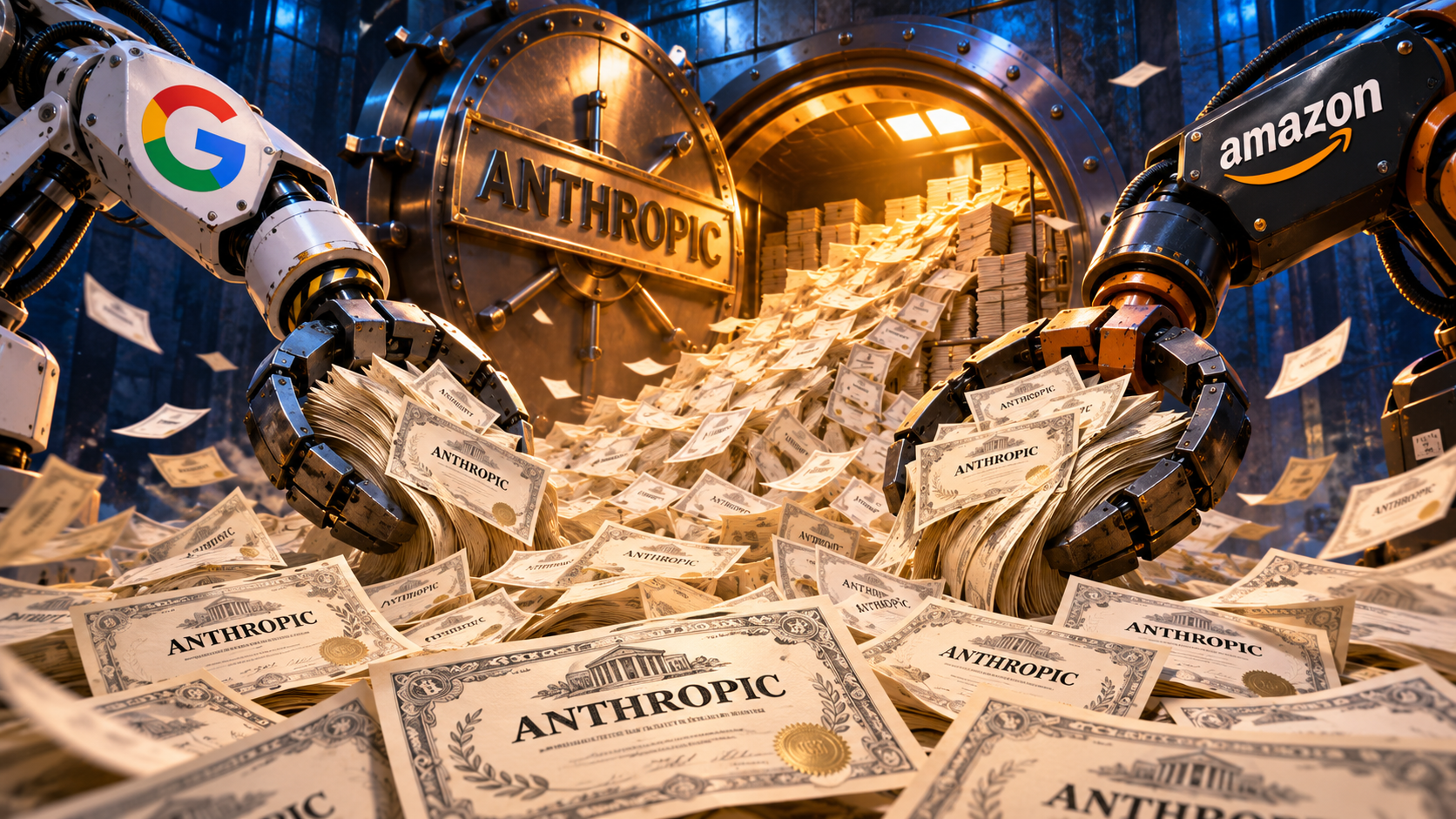
Anthropic’s (Anthropic Stock Quote, Chart, News, Analysts, Financials NASDAQ:ANT) record-breaking US$107.3-billion initial public offering could provide a significant boost to Amazon and Alphabet while testing investor appetite for artificial intelligence stocks following a sharp decline in Nvidia shares, according to Burnham Park Capital Markets analyst Rohit Kulkarni.
The company began trading on the Nasdaq under the symbol ANT on Nov. 19.
In his Nov. 19 report, Kulkarni noted that Anthropic priced its offering at US$83.00 per share, approximately 6% above the upper end of its proposed $70.00-to-$78.00 range, and increased the size of the offering in response to investor demand. Burnham Park is not participating in the offering, and the report does not constitute an investment recommendation or initiation of coverage.
“We read above-range pricing and an upsized book, in a month where Nvidia is down 26%, as a strong vote of confidence in Anthropic’s ‘model-led growth’ story,” Kulkarni said.
Anthropic increased its primary offering to 956.4 million shares from 801.4 million, while its seven co-founders are selling another 23.6 million shares. Including a concurrent US$26-billion private placement involving strategic investors, the company raised approximately US$107.3-billion, surpassing SpaceX’s June offering as the largest initial public offering on record.
At $83.00 per share, Kulkarni estimates Anthropic’s fully diluted equity value at approximately $1.45-trillion, based on 17.5 billion shares. The offering could also have significant financial implications for two of Anthropic’s largest technology partners.
“Amazon will own ~14.7% of Anthropic after the IPO and private placement, and Google ~13.7%. Both stakes are Class N shares with no voting control,” Kulkarni said. “At $83, we estimate Amazon’s shares are worth ~$159bn and Google’s ~$147bn (our math, on S-1/A share counts).”
Amazon’s potential economic exposure is considerably larger because of its convertible notes. Kulkarni estimates that converting those notes would increase Amazon’s ownership to approximately 23.8%, bringing the combined value of its holdings to roughly US$290-billion, compared with approximately US$8-billion invested.
Both Amazon and Google also maintain commercial relationships with Anthropic, each accounting for approximately 12% of its 2025 revenue while supplying cloud computing capacity.
“A strong debut should mean sizable mark-to-market gains in GOOGL’s and AMZN’s Q4 results,” Kulkarni said.
The analyst said Anthropic’s valuation is difficult to compare directly with conventional software companies because of the substantial computing infrastructure and research spending required to develop advanced AI models. “Anthropic combines software-like revenue scalability and gross margins with infrastructure-like compute commitments and continuous frontier research costs, so there is no clean 1:1 comparable,” he said.
Kulkarni therefore compared Anthropic with a range of AI infrastructure companies, major technology platforms and enterprise software providers.
He said the company’s latest revenue figures were an important factor supporting investor demand. “The October run rate was the most closely watched pre-roadshow data point: the amended S-1 points to ~$81bn at October 31, above the $76bn level we had flagged as a potential negative,” he said.
Kulkarni forecasts revenue approaching US$55-billion in 2026, potentially exceeding US$125-billion in 2027 and US$175-billion in 2028. At the offering price, his estimates imply a valuation of approximately 12 times projected 2027 revenue and eight times 2028 revenue.
While the analyst expects strong initial interest, he cautioned that the relatively small public float could increase volatility. Approximately 980 million shares are being sold, representing about 5.6% of fully diluted shares.
Kulkarni said the company’s first quarterly results, computing expenses, future share lock-up expiries and potential index inclusion will be important factors in determining whether any initial gains are sustained. He also suggested a successful offering could improve sentiment toward other AI companies considering public listings.
-30-
Rod Weatherbie
Writer
Rod Weatherbie is a journalist based in Prince Edward Island. Since 2004, he has written extensively about the Canadian property and casualty insurance landscape. He was also a founder and contributing editor for a Toronto-based arts website and a PEI-based food magazine. His fiction and poetry have been featured in The Fiddlehead, The Antigonish Review, and Juniper.