


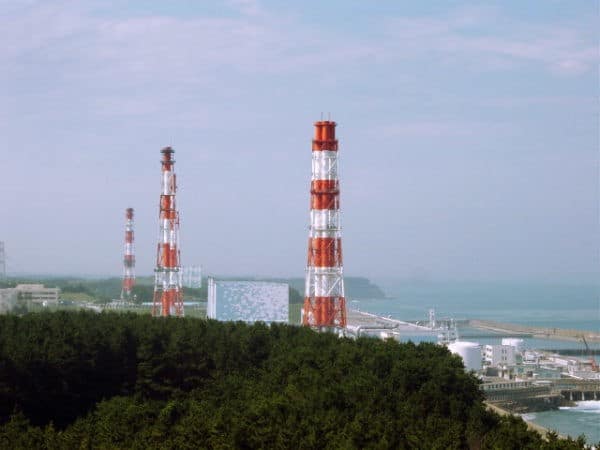
Clean up Fukushima?
The Fukushima disaster occurred almost six years ago when an earthquake-caused tsunami crashed into the Fukushima Daiichi nuclear power plant, releasing large amounts of radioactive material into the surrounding area and creating an environmental problem still left to be solved: what to do with the millions of litres of contaminated water used to cool the damaged reactors?
Now, scientists from Rice University in Houston, Texas, and Kazan Federal University in Russia think that they have come up with a solution that’s both affordable and effective.
While the worry about radioactive contaminants reaching across the Pacific ocean to North America in large quantities has more or less been resolved, with numerous studies showing almost negligible rises in radioactive contaminants in fish along the west coast of Canada and the U.S., the issue of trying to deal with the tonnes of stored, contaminated water remains.
In a new study, researchers say their formulation of oxidatively modified carbon (OMC) is successful at absorbing the radioactive elements cesium and strontium, both found in the stored water at Fukushima.
“There is a constant need to develop advantageous materials for removing radioactive waste from aqueous systems,” say the authors, whose study is published in the journal Carbon. “Here we propose a new carbon-based material prepared by oxidative treatment of various natural carbon sources.”
The researchers took an inexpensive, coke-derived powder known as C-seal F, used as an additive to drilling fluids in the oil industry, and combined it with a carbon-heavy mineral called shungite to produce the OMC material. They found that treating the carbon particles with oxidizing chemicals increased the surface area and supplied the necessary grouping of oxygen molecules across the material for absorbing the toxic metals. In column filtration tests, the new carbon filter removed nearly 93 per cent of cesium and 92 of strontium in one pass.
“Just passing contaminated water through OMC filters will extract the radioactive elements and permit safe discharge to the ocean,” says James Tour of the Department of Chemistry, Department of Material Science and Nano Engineering, and NanoCarbon Center at Rice University, in a statement. “This could be a major advance for the cleanup effort at Fukushima.”
The radioactivity released into the surrounding area led the Japanese government to evacuate all residents within a 20 kilometre range of the reactor site. Since the disaster, researchers on the North American side of the Pacific began measuring radioactive levels, as water currents are known to circulate across from Asia.
To this day, evidence of radioactive isotopes like cesium-134 and -137 have been found in the waters and wildlife off Canada’s west coast, attributable to Fukushima, but readings are said to be at a low and harmless level. For instance, tuna caught in the Pacific post-Fukushima was found to contain measurable amounts of C-134 and C-137, yet at levels lower than even the naturally occurring radioactive potassium in tuna, itself not a health concern.
A study last year of B.C. salmon found no detectable levels of C-134 in samples taken from 156 salmon, while trace evidence of C-137 found in the fish could not reliably be directed attributed to the Fukushima disaster as opposed to other possible sources.
About The Author /

Jayson is a writer, researcher and educator with a PhD in political philosophy from the University of Ottawa. His interests range from bioethics and innovations in the health sciences to governance, social justice and the history of ideas.


Comment
Leave a Reply
You must be logged in to post a comment.
RELATED POSTS
 Share
Share Tweet
Tweet Share
ShareTRENDING
All Trending →
TTNM keeps “Buy” rating at Haywood
March 20, 2024
NEO stock has price target chopped at Paradigm
March 18, 2024
Groupon’s turnaround is accelerating, Roth says
March 18, 2024
Does this claim include cleaning of the worlds oceans?If not this is BS.
Scientist… by Jayson McLean 21JAN17. Facts do not support article theme. 28MAR79 Three Mile Island partial nuclear reactor meltdown took 7 years of continuous effort to clean up meltdown. 26APR86 Chernobyl nuclear meltdown has never been cleaned up rather cement is being poured over the top because the molten radioactive melted reactor core is too massive to remove. Fukushima 11MAR11 is not one or two but three molten radioactive melted reactor cores that TEPCO and Japan have refused to identify location of reactor cores let alone begin clean up. Addressing contaminated fresh water and ocean water contaminated by three molten radioactive reactor cores that may or may not still reside within the boundary nuclear reactor containment vessels is essential. Please do not confuse decontamination of contaminated water with clean up of secret location of molten radioactive nuclear reactor cores.
Totally misleading title.
CONTAINMENT OR 600 tons of burning plutonium will turn the oceans and atmosphere into death
http://www.supermodeling.tv/FUKIUSHIMA_REACTOR_CONTAINMENT.html
Fukushima 600 tons of plutonium burning in the pacific is spreading across the world and its ability to cause disease and death is unknown, but estimated to be able to easily shut down the food chain in the ocean and potentially on land too, it must be cleaned up, the first 3 links are ugly news, the last link is a way to clean up the radiation, Japan is in need of getting down to a through cleanup, what they are doing presently is worthless and puts the world in jeopardy, if you like your standard of living, Fukushima will change that, you and your family will potentially get sick from it or die, what is a zero hedge fund for, use some of you money to make alot of noise to get the cleanup started immediately:
http://www.globalresearch.ca/fukushima-worst-industrial-cataclysm-in-history-of-world-nuclear-engineer-arnie-gundersen/5580249
http://www.globalresearch.ca/fukushima-out-of-control-radiation-levels-significantly-higher-than-unimaginable/5574837?utm_campaign=magnet&utm_source=article_page&utm_medium=related_articles
http://enenews.com/
http://www.supermodeling.tv/FUKIUSHIMA_REACTOR_CONTAINMENT.html