
Should you sell your DoorDash stock?


Roth Capital Markets analyst Rohit Kulkarni trimmed his price target on DoorDash (DoorDash Stock Quote, Chart, News, Analysts, Financials NYSE:DASH) to $200 from $205 on Feb. 19, maintaining a “Neutral” rating after what he called a “clean beat” in Q4 but a “mixed bag” Q1 outlook.
Kulkarni said he was surprised to see shares indicated up 14% after hours following the print, despite Q1 guidance implying GOV in-line with expectations and EBITDA below consensus. Management flagged incremental marketplace investments that will weigh on first-half margins, with second-half improvement expected as Grocery unit economics turn positive.
“Our top-line marketplace volume (GOV) estimates for 2026 go up while margin estimates come down slightly,” Kulkarni said, adding that the stock’s valuation “implies balanced risk/reward.”
At approximately $197, he noted DoorDash trades at roughly 24x 2026E EBITDA — the highest multiple across Consumer Internet peers — and even steeper on an EV/EBIT basis given limited GAAP profitability.
“We view these valuation levels to imply balanced risk/reward. Plus, 1H noise surrounding incremental investments in Deliveroo and annual Dasher cost increases from regulatory changes likely increase near-term downside risk, in our opinion,” he said.
Kulkarni forecasts DoorDash will generate $3.7-billion in Adjusted EBITDA on revenue of $18.2-billion in fiscal 2026, improving to $5.6-billion in EBITDA on revenue of $22.8-billion in fiscal 2027.
Investor debate now centres on advertising and subscription contribution, incremental margins and profitability beyond the core U.S. restaurant segment. Net revenue margin declined to 13.3% in Q4 with Deliveroo dilution, compared to 13.8% in Q3.
Total GOV rose 39% year-over-year in Q4, or 25% excluding Deliveroo, while U.S. restaurant GOV posted its second-highest growth rate in 15 quarters. Management expects U.S. Grocery & Retail unit economics to turn positive in 2H26.
Bears, however, point to below-expectation Q1 EBITDA guidance, Deliveroo investment drag, weather impacts and rising Dasher costs in regulated markets such as New York City. Kulkarni also cited limited new disclosure on advertising growth and ongoing replatforming execution risk extending through 2026.
With shares already reflecting a premium valuation, Kulkarni believes near-term upside is constrained as margin pressure offsets accelerating volume growth.
-30-
Tara Whittet
Writer
Tara Whittet is Senior Sales Manager at Cantech Letter.
Related Posts

Scotia Wealth Management portfolio manager Stan Wong said on BNN Bloomberg’s Market Call on Oct. 9 that DoorDash (DoorDash Stock...
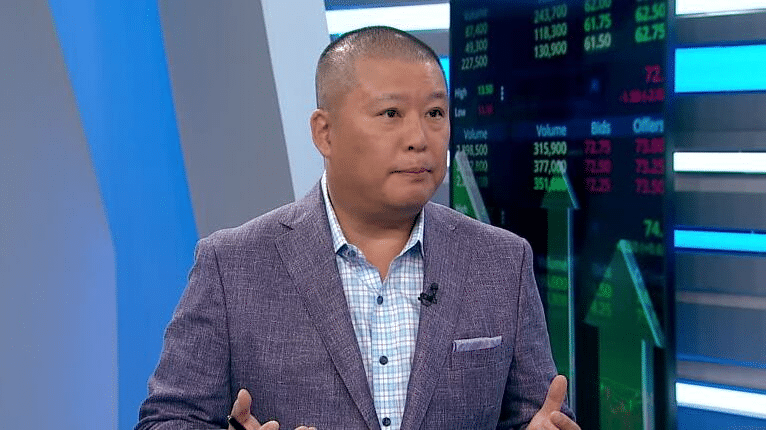
Scotia Wealth Management portfolio manager Stan Wong told BNN Bloomberg’s Market Watch on Sept. 4 that DoorDash (DoorDash Stock Quote,...