
Could BlackBerry make a comeback with a “dumbphone”?

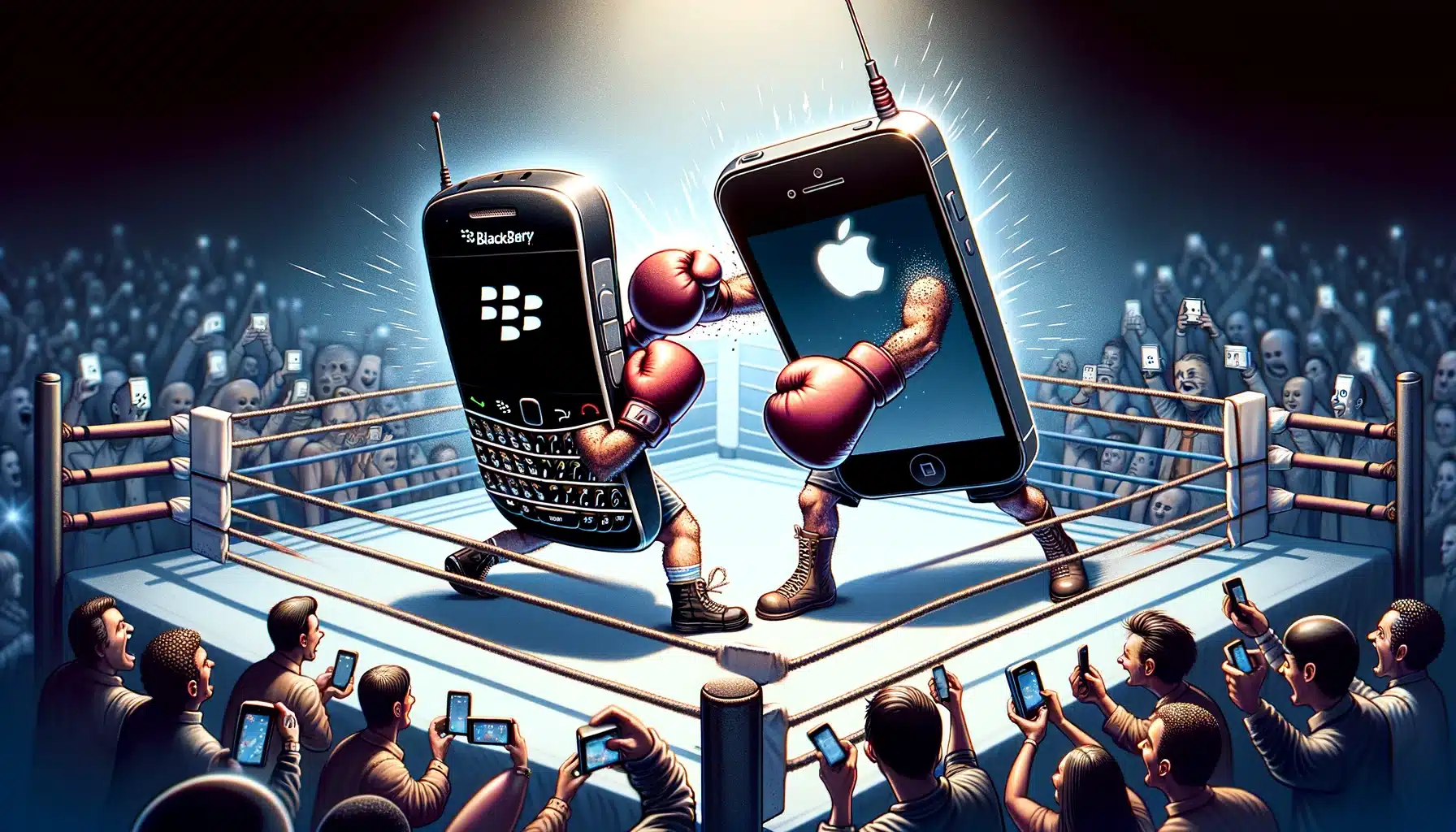
As concerns grow about screen time, distraction and the psychological toll of always-on connectivity, a quiet backlash against smartphones is gathering momentum. Online communities devoted to so-called “dumbphones” — also known as feature phones or simple phones — have expanded rapidly, with users swapping apps for physical cameras, notebooks, calendars, MP3 players and paper books.
According to CBC, more than 98,600 feature phones -an industry term for what people often call a “dumbphone,” It sits between a classic pre-smartphone handset and a modern smartphone- were sold in Canada in 2023, up 25% from the year before, citing data from Counterpoint Research. While basic phones have long appealed to seniors and tradespeople, the latest wave of demand is being driven by parents seeking to limit children’s exposure to social media and by adults deliberately scaling back digital habits. Price and durability are also part of the appeal, with most dumbphones selling for under $100.
Against that backdrop, a familiar name keeps resurfacing in online discussions: BlackBerry (BlackBerry Stock Quote, Chart, News, Analysts, Financials TSX:BB).
Movements such as “Bring Back BlackBerry” and a growing cohort of content creators documenting their switch away from smartphones have reignited interest in the company’s once-iconic keyboard phones. For many users, BlackBerry represents a time when mobile devices were primarily tools for communication, not endless content feeds.
The problem is that BlackBerry, as a phone maker, no longer exists.
BlackBerry stopped designing and manufacturing its own smartphones in 2016, later licensing the brand to third parties. Those efforts ended as well, and on Jan. 4, 2022, official support for BlackBerry OS and BB10 devices was shut down entirely. Since then, BlackBerry has focused exclusively on software and services, notably QNX, cybersecurity and Internet-of-Things platforms.
While basic phones have long appealed to seniors and tradespeople, the latest wave of demand is being driven by parents seeking to limit children’s exposure to social media and by adults deliberately scaling back digital habits…
None of the people who built “BlackBerry the phone company” remain involved in handset development. The patents tied to its mobile hardware were sold in 2023 to Malikie Innovations, an Irish patent-licensing firm focused on wireless networking, messaging and AI technologies. What remains of the old BlackBerry phone business is largely symbolic: an outdated operating system, aging device designs and the brand itself.
The broader dumbphone trend, however, is real. CNN has reported on highly engaged online communities that trade advice on buying “deadstock” handsets and compare specifications of current feature phones. Research cited in academic literature suggests that while “smartphone addiction” remains a contested concept, many users experience problematic smartphone use that interferes with daily life, a concern that has helped fuel interest in simpler devices.
Manufacturers have taken notice. HMD Global, which licenses the Nokia brand, continues to sell flip phones and recently reported that sales of its Nokia 2660 Flip doubled in Europe. The company has even relaunched models that trace their origins back to the late 1990s.
These devices are not nostalgic novelties so much as functional responses to a changing market: phones that call, text and last for days on a single charge.
For BlackBerry fans, the closest thing to a comeback is happening on the margins. According to Tech Advisor, a Chinese firm called Zinwa Technologies is refurbishing older BlackBerry models by modernizing their internals. The BlackBerry Classic (Q20), for example, is being reintroduced as the Zinwa Q25 Pro, with upgraded processors, memory, batteries, cameras, 4G LTE and Android 13.
There have also been unverified rumours — including a now-deleted Reddit post — suggesting that a U.K. startup explored reviving the BlackBerry brand with a modern QWERTY phone featuring 5G and Android. No confirmed product has emerged.
BlackBerry phones, as a living ecosystem, are gone. The company exited handset manufacturing in 2016, legacy devices lost support in 2022, and its patents now sit with a licensing firm. BlackBerry today is a software company, not a consumer electronics brand.
Still, the renewed appetite for dumbphones underscores something important: the values that once made BlackBerry successful- focus, reliability and purpose-built communication- are back in demand. Whether that demand ever translates into a true BlackBerry-branded phone again is uncertain. But the fact that people are still asking the question nearly a decade later speaks volumes about the brand’s enduring cultural pull.
-30-
Rod Weatherbie
Writer
Rod Weatherbie is a journalist based in Prince Edward Island. Since 2004, he has written extensively about the Canadian property and casualty insurance landscape. He was also a founder and contributing editor for a Toronto-based arts website and a PEI-based food magazine. His fiction and poetry have been featured in The Fiddlehead, The Antigonish Review, and Juniper.
Related Posts

RBC Dominion Securities analyst Paul Treiber raised his target price for BlackBerry (BlackBerry Stock Quote, Chart, News, Analysts, Financials NYSE:BB)...
Ahead of its Q2 report, RBC analyst Paul Treiber remains on the fence about BlackBerry (BlackBerry Stock Quote, Chart, News,...