


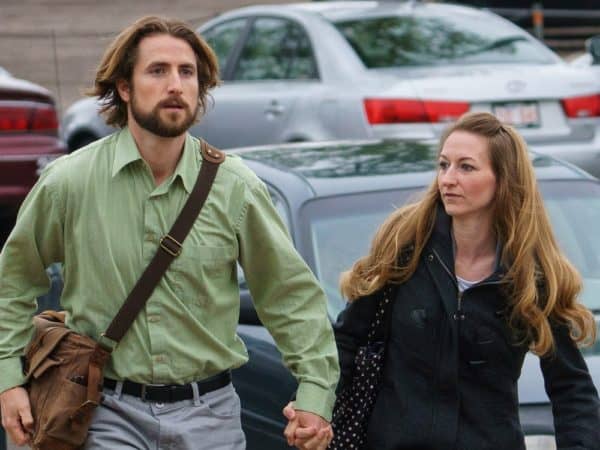
The Alberta Party is calling on the province’s NDP government to restrict the practice of naturopathy in the province in light of the tragic death of 19 month old Ezekiel Stephan and the recent conviction of Stephan’s parents, David and Collet Stephan, of failing to provide the necessaries of life.
The leader of the Alberta Party, Greg Clark, has asked the government to consider changing the regulations governing naturopaths so as to restrict their ability to work with pediatric patients and to use the title “doctor” or the phrase “naturopathic medicine.”
“When the provincial government legitimizes practices that have a questionable basis in science, Albertans are put at risk,” says Clark, whose party currently has one seat in the 87 member legislative assembly.
“Where clear evidence based on rigorous scientific evaluation is lacking, as is the case with many naturopathic interventions, at best it is benign, at worst it directs people outside science-based medicine to potentially tragic consequences,” says Clark.

On April 26, a provincial jury in Lethbridge, Alberta, found David and Collet Stephan complicit in the 2012 death of their son who died of viral meningitis, a condition the Stephans treated with naturopathic remedies despite warnings from a neighbour who was a nurse and from a naturopath, both of whom advised that Ezekiel be taken to see a doctor.
“They definitely, definitely loved their son but as stated in our closing arguments, unfortunately sometimes love just isn’t enough,” said Crown prosecutor Lisa Weich. “Parents still have to follow a standard of care as set by criminal law.”
The Stephans will next appear in court on June 13th for sentencing. The maximum penalty for failing to provide the necessaries of life is five years in prison.
Alberta’s naturopaths received professional status in 2012 after more than a decade of negotiations, effectively creating the College of Naturopathic Doctors of Alberta, a self-regulating body that operates under the province’s Health Professions Act and gives practitioners the power to perform injections, minor surgeries, ear exams and some intravenous treatments.
Alberta naturopaths cannot prescribe drugs or order x-rays and are required to take three years of “pre-medical education” along with a four year accredited professional program. Over the past two decades other provinces in Canada have enacted similar regulatory colleges for naturopathy.
Both British Columbia and Ontario have regulatory bodies that grant naturopaths the ability to prescribe drugs for their patients.
A similar case came to light last year in Australia when a naturopath was charged with reckless grievous bodily harm and failure to provide for a child causing danger of death when her treatment of a baby boy left him severely malnourished and close to death. Despite its popularity -about 10 per cent of the population use naturopathic treatments- naturopathy is not yet a registered profession in Australia, with critics claiming that although regulation would put needed restrictions on who could call themselves a naturopath, the move would legitimize a scientifically unproven practice.
This position is echoed by Calgary bioethicist, Juliet Guichon of the Cumming School of Medicine, who says that the death of Ezekiel Stephan is a “wake up call” to the province over the regulation of naturopathy. “People who say naturopathy is an evidence based medicine have to come to grips that the child is dead and reconsider their views,” says Guichon.
Alberta’s Health Minister Sarah Hoffman has stated that the province is currently reviewing the regulations governing its naturopathic practitioners.
About The Author /
Jayson is a writer, researcher and educator with a PhD in political philosophy from the University of Ottawa. His interests range from bioethics and innovations in the health sciences to governance, social justice and the history of ideas.


Comment
Leave a Reply
You must be logged in to post a comment.
RELATED POSTS

 Share
Share Tweet
Tweet Share
ShareTRENDING
All Trending →
TTNM keeps “Buy” rating at Haywood
March 20, 2024

NEO stock has price target chopped at Paradigm
March 18, 2024
Groupon’s turnaround is accelerating, Roth says
March 18, 2024
Why should naturopathic treatments be restricted any more than treatments prescribed by
doctors in the “legitimate” medical system? That system is broken. The reason people seek out alternative medical care in the first place is because they have lost faith in conventional practices. There is a gross lack nutritional knowledge disseminating from medical professionals and among other things, the general public is tired of the side effects from pharmaceutical drugs. Is the Alberta Party [Clark] aware that 1/3 of all pharmaceutical drugs are approved by the FDA after a single trial without replication? Probably not. Most doctors aren’t aware of that and most believe that standards for [FDA] approval are far more rigorous than they are. Further, almost all drug trials are done on animals, which rarely affect humans in the same way they do animals. Human trials, for reasons of liability, are often limited to male volunteers between the ages of 20-35, which of course excludes large segments of the population such as children, the elderly and women. What this means is that ‘scientific evidence’ occurs after a drug is approved and has been used by the public for several years. It also means that drugs are prescribed without the doctor fully understanding its potential implications. So in reality, prescriptions and procedures “not proven effective by scientific examination” are given to Albertans every day and the practice is not limited to naturopathic doctors. If Clark really wants to protect Albertan’s from practices that have a questionable basis in science, he need not single out naturopathic doctors.
I agree with the Alberta Party but I do find it curious that a hard right party which usually argues for less government regulation and more individual freedom would be taking this position.
It is obvious that a condition as dangerous as this under these circumstances, given the available statistics on the illness; therefore, if this man had done any medical research to try and save his son, he would be likely still alive. Unless you are a highly skilled alchemist or chemist and biologist and understand the underpinnings of the illness and are medically adept no person should ever attempt to circumvent a doctor due to personal belief. A man must have the courage to trust others under such circumstances. Anything else is negligence due to arrogance. The fact that the child is needlessly diseased proves the point. The way is still he’s trying to defend his actions makes me sick to my stomach!
You are making strong allegations without any facts. Can you give any concrete examples of the FDA approving a drug outside of standards? Also why are you referring to an american regulatory body for a Canadian issue? The FDA is under pressure by lobbying of special interest groups like the naturopathic and the supplement industry to approve and constantly have to fight for proper analysis and standards before approving.
You state the following “gross lack nutritional knowledge”. Is this based on your expert nutritional knowledge or some substantiated report that has passed scrutiny and proven?
it is very hypocritical of the medical establishment or government to claim foul in such cases, when over 500 meningitis patients died last year in the USA under their “watchful” care.
Practice of Naturopathy when it comes to prevention is good, and probably the best medicine. When it comes to treating Meningitis, it’s called idiopathy!